Blogia

Our 6th grade Blog

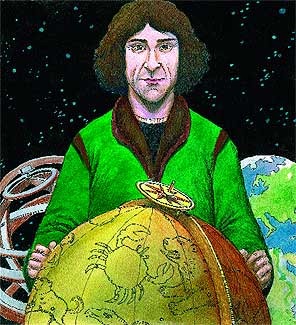
19 de febrero: 540º aniversario del nacimiento de NICOLÁS COPÉRNICO

19 de febrero: 540º aniversario del nacimiento de NICOLÁS COPÉRNICO

El científico, reconocido por su modelo matemático heliocéntrico del Sistema Solar, nació el 19 de febrero de 1473 en Torun (Polonia), en el seno de una familia adinerada que se dedicaba al comercio.

En 1491, Nicolás Copérnico ingresó a la Universidad de Cracovia, pero en 1496 se trasladó a Italia con el objetivo de terminar su educación en Bolonia, ahí cursó derecho canónico y además, recibió la influencia del humanismo italiano.

Practicó la medicina y cultivó sus intereses humanistas, y en 1507 elaboró su primera muestra de un sistema astronómico heliocéntrico, el cual se opuso al tradicional sistema ptolemaico.

En esta teoría Copérnico planteaba que las esferas que giraban alrededor de la Tierra, podían hacerlo alrededor de su propio eje una vez al día. Idea que no era demasiado original porque se les había ocurrido antes a otros.

La verdadera aportación de Copérnico fue la de proponer que la Tierra no era el centro del mundo, sino que la Tierra y todos los demás planetas se movían describiendo círculos alrededor del Sol.

En 1616, la iglesia Católica colocó el trabajo de Copérnico en su lista de libros prohibidos.

Falleció el 24 de mayo de 1543.

Si quieres saber más, pincha aquí.

14th February: SAINT VALENTINE'S DAY

14th February: SAINT VALENTINE'S DAY

Every February we celebrate Valentine’s Day by giving flowers, candy and cards to those we love. We do this in honor of Saint Valentine. You may be wondering, "Who is St. Valentine"? Time to brush up on your Valentine’s history!

Legend has it that Valentine was a priest who served during third century Rome. There was an Emperor at that time by the name of Claudius II. Emperor Claudius II decided that single men made better soldiers than those that were married. With this thought in mind he outlawed marriage for young men in hopes of building a stronger military base. Supposedly, Valentine, decided this decree just wasn’t fair and chose to marry young couples secretly. When Emperor Claudius II found out about Valentine’s actions he had him put to death.

Another legend has it that Valentine was an imprisoned man who fell in love with his jailor’s daughter. Before he was put to death he sent the first ’valentine’ himself when he wrote her a letter and signed it ’Your Valentine’, words still used on cards today.

Perhaps we’ll never know the true identity and story behind the man named St. Valentine, but this much is for sure... February has been the month to celebrate love for a long time, dating clear back to the Middle Ages. In fact, Valentines ranks second only to Christmas in number of greeting cards sent.

Another valentine gentleman you may be wondering about is Cupid (Latin cupido, "desire"). In Roman mythology Cupid is the son of Venus, goddess of love. His counterpart in Greek mythology is Eros, god of love. Cupid is often said to be a mischievous boy who goes around wounding both gods and humans with his arrows, causing them to fall in love.

Also, check out the History of Valentine’s Day and other ideas for Valentine’s Day, including creative Valentine cards, Valentine party games, and many more fun activities.

12th February: PANCAKE DAY / SHROVE TUESDAY

In the UK, Shrove Tuesday is also known as Pancake Day (or Pancake Tuesday to some people) because it is the one day of the year when almost everyone eats a pancake.

In 2013 Pancake Day is on Tuesday 12 February.

What happens on Pancake Day in England?

Read on to find out why we eat pancakes on Shrove Tuesday and other facts about this special time of year.

 What is Pancake Day?

Pancake Day (also known as Shrove Tuesday) is the last day before the period which Christians call Lent. It is traditional on this day to eat pancakes in England. 

 Why are Pancakes eaten on Shrove Tuesday?

Lent is a time of abstinence, of giving things up. So Shrove Tuesday is the last chance to indulge yourself, and to use up the foods that aren’t allowed in Lent. Pancakes are eaten on this day because they contain fat, butter and eggs which were forbidden during Lent.

 When is Shrove Tuesday (Pancake Day)?

Shrove Tuesday is celebrated the day before Ash Wednesday and is therefore the final day before the commencement of Lent, a Christian festival leading up to Easter Sunday (Easter Day).

Shrove Tuesday always falls 47 days before Easter Sunday, so the date varies from year to year and falls between 3 February and 9 March.

Why do Christians call the day ’Shrove Tuesday’?

The name Shrove comes from the old word "shrive" which means to confess. On Shrove Tuesday, in the Middle Ages, people used to confess their sins so that they were forgiven before the season of Lent began. 

 What is Shrove Tuesday?

Shrove Tuesday is a day of celebration as well as penitence, because it’s the last day before Lent. Throughout the United Kingdom, and in other countries too, people indulge themselves on foods that traditionally aren’t allowed during Lent. Pancakes are eaten on this day because they contain fat, butter and eggs which were forbidden during Lent. 

 What is an English Pancake?

A pancake is a thin, flat cake, made of batter and fried in a pan.


Caster sugar (superfine sugar) is sprinkled over the top and a dash of fresh lemon juice added. The pancake is then rolled. Some people add golden syrup or jam. 

rolled pancake

(Click here for a pancake recipe)

 Other names for Shrove Tuesday

United Kingdom, Ireland, and Australia - Shrove TuesdayPancake Day orPancake Tuesday.

Spain - Martes de Carnaval - last day of Carnival before Ash Wednesday and the period of Lent.

Brazil Terça-feira gorda - Fat Tuesday - the final day of Brazilian Carnival.

Greece - Apocreas, which means "from the meat" since they don’t eat meat during Lent, either.

Sweden - Fettisdagen (Fat Tuesday).

USA In Catholic and French-speaking parts of the United States this day is called Mardi Gras.

Germany - "Fastnacht" (Also spelt "Fasnacht", "Fasenacht", "Fasteloven" (in the Rhine area) or "Fasching" in Bavaria.)

In France they call it Mardi Gras which means Grease or Fat Tuesday.

In Iceland the day is known as "Sprengidagur" (Bursting day).


Now check your knowledge and see how much you know about Pancake Day.

CIRCULATION and EXCRETION- Questions

  1. Why does the body need nutrients and oxygen? How are they carried around our bodies?
  2. What does the body do with the substances it doesn’t need or which are harmful?
  3. What does the circulatory system do?
  4. Which systems are involved in the process of waste elimination?
  5. Explain: pulmonary circulation and general circulation.
  6. What is the difference between oxygenated blood and deoxygenated blood?
  7. What does the blood carry? What does it contains?
  8. How many types of blood cells are there? Name them and say what their functions are.
  9. Where do the blood vessels go?
  10. Which blood vessels carry blood to the right atrium?
  11. What are the capillaries?
  12. How many chambers has the heart got? How are they called?
  13. Which chamber of the heart pumps blood around the body?
  14. What does the septum do?
  15. Where does blood pick up oxygen?
  16. What are the functions of the excretory system? Name the two main parts of the excretory system.
  17. What do sweat glands do? What does sweat contain?
  18. What are the main parts of the urinary tract? And what are their functions?
  19. Explain the process of eliminating waste products and harmful substances through the urinary tract.
  20. Where are the kidneys?
  21. What blood vessels carry blood to the kidneys?

THE CIRCULATORY SYSTEM

THE EXCRETORY SYSTEM

MENSAJE DE SONIA Y RAQUEL...

¡Hola chicos y chicas de 6º!

Gracias por abrirnos un espacio en vuestro blog. Como no nos vamos a ver hasta dentro de un mes, nos gustaría seguir en contacto por aquí y saber qué tal os van las cosas hasta la próxima sesión.

Esta semana hemos tenido el tercer taller de  “del cole al instituto”. Hemos aprendido algunos nombres nuevos de emociones y hemos comprobado que a veces no es fácil darnos cuenta de cómo nos sentimos.

En alguna clase también nos ha dado tiempo a hacer un pequeño debate sobre qué opinamos ante algunas situaciones que se dan en nuestra clase y en el colegio, y qué cosas podríamos hacer para mejorar aquello que no nos gusta.

Una de las actividades del taller ha sido ordenar las emociones por familias, y al hacerlo hemos podido ver que muchas veces las emociones están mezcladas y podemos sentir más de una a la vez.

¿Estáis de acuerdo? Aquí os dejamos un cuento que habla sobre esto... 

La Furia y la Tristeza

Érase una vez, una laguna de agua cristalina donde nadaban peces de todos los colores y donde todas las tonalidades de azul y verde se reflejaban y brillaban con el sol.

Un día, se acercaron hasta aquel estanque mágico y transparente la Tristeza y la Furia para bañarse.

Las dos se quitaron sus vestidos y desnudas entraron en el estanque. La Furia, que tenía prisa, como es su costumbre, corriendo y sin saber por qué, se bañó rápidamente y más rápidamente aún salió del agua.

Pero la Furia que es ciega o por lo menos no distingue claramente la realidad, desnuda y apresurada, se puso al salir el primer vestido que encontró.

Y sucedió que aquel vestido no era el suyo, sino el de la tristeza. Y así vestida de tristeza, la furia se fué.

Muy calmada y muy serena, dispuesta como siempre a quedarse en el lugar donde está, la tristeza terminó su baño y sin ninguna prisa, sin conciencia del paso del tiempo, con pereza y lentamente salió del estanque.

En la orilla se dió cuenta de que su ropa ya no estaba. Como todo el mundo sabe, si hay algo que a la tristeza no le gusta  nada es quedar al desnudo. Así que se puso la única ropa que había junto al estanque: el vestido de la furia.

Cuentan que desde entonces muchas veces uno se encuentra con la Furia, ciega, cruel, terrible y enfadada. Pero si nos ponemos a mirar bien, nos damos cuenta de que esta furia que vemos es sólo un disfraz y que detrás del disfraz de la furia en realidad, está escondida la Tristeza.

¿Qué pensáis?  ¿Estáis de acuerdo con lo que dice el cuento?

¿Alguna vez habéis sentido tristeza por dentro pero lo que habéis demostrado por fuera es enfado, rabia o furia? 

¿Porqué algunas veces es difícil reconocer que nos sentimos tristes?

Nos encantará leer vuestros comentarios, preguntas, sugerencias sobre los talleres...

Un abrazo.

Sonia y Raquel 


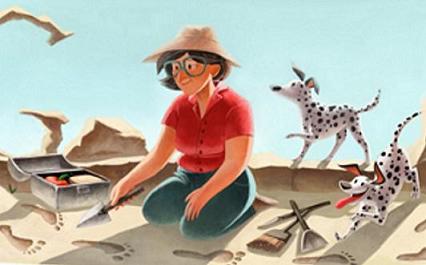
100º Aniversario del nacimiento de MARY LEAKEY, la paleontóloga sin la que la evolución humana sería un misterio.

100º Aniversario del nacimiento de MARY LEAKEY, la paleontóloga sin la que la evolución humana sería un misterio.

Si no fuese por Mary Leakey la historia de la evolución humana seguramente sería aún hoy un auténtico misterio. La paleontóloga, de cuyo nacimiento se cumplen hoy cien años, formó parte de un equipo de arqueólogos que descubrieron en Kenia y Tanzania fósiles que demostraron que los orígenes del hombre eran más antiguos de lo que se creía. Casada con el también arqueólogo Louis Leakey -juntos formaron una de las parejas de paleontólogos más famosas del siglo XX-, Mary Leakey fue la encargada de dirigir las excavaciones de la garganta de Olduvai, un importante yacimiento en el que se halló una mandíbula de Paranthropus boisei. Mary Leakey, fiel a su instinto, siguió una pista de 89 metros de largo en donde quedaron marcadas las huellas del homo habilis, y así, descubrió que este tipo de especie se desplazaba de forma bípeda, una de las claves más importantes del estilo de vida durante el Pleistoceno.

Mary Leakey encontró el cráneo un homínido de 1,75 millones de años de antigüedad, el Australopithecus boisei, y halló junto a su marido restos fosilizados de cuatro individuos de entre 1,6 y 1,8 millones de años de antigüedad, que, en un estudio de la revista Nature publicado en el año 1964, fueron denominados Homo habilis. Esto encendió un tenso debate entre la comunidad científica -algunos expertos encontraban importantes similitudes entre este nuevo hallazgo y el Australophitecus y el Homo erectus, especies por encima y por debajo en la escala de antigüedad- sobre el que, años más tarde, arrojó luz el hijo de Mary Leakey cuando localizó en Kenia cráneos de hace dos millones de años.

Del matrimonio de Mary Leakey y Louis Leakey nació su hijo Richard Leakey en Nairobi en 1944. Pronto siguió los pasos de sus padres. A los seis años encontró su primer fósil, una parte de un cerdo gigante extinguido, y en 1967 dirigió una expedición internacional en el valle del río Omo que duró más de 30 años y en la que se descubrieron más de 200 fósiles. Ya la pasión de Mary Leakey por la paleontología se remontaba también a sus primeros años de vida. A raíz de la profesión de su padre, un pintor paisajista que se dedicaba a viajar por todo europa con su familia, Mary Leakey conoció la Dordoña, una región francesa rica en yacimientos de arte prehistórico. Tras la muerte de su padre, regresó con su madre a Londres y se propuso especializarse en Prehistoria. Fue entonces cuando una de sus profesoras descubrió en Mary Leakey un innato talento para el dibujo y le propuso ilustrar uno de sus estudios sobre un área fosilífera situada al norte de Egipto. Además de abrirle las puertas al universo de la arqueología, la Dra. Gertrude Caton-Thompson le presentó a su futuro marido Louis Leakey, quien, impresionado por la destreza ilustrativa de Mary Leakey, le pidió que colaborase también con él en su libro Adam’s Ancestors. Fue el inicio de una relación que duró toda una vida y de la que nacieron, además de Richard Leakey, otros dos hijos, Jonathan y Philip.

How much do you know about your heart?

Find out by taking this quiz!

If you still need to look for more information about your Heart and the Circulatory System, try here.

5 de febrero: DÍA INTERNACIONAL DE LA INTERNET SEGURA

Pincha en el link y visita la página oficial del Día Internacional de la Internet Segura.

CONÉCTATE Y RESPETA


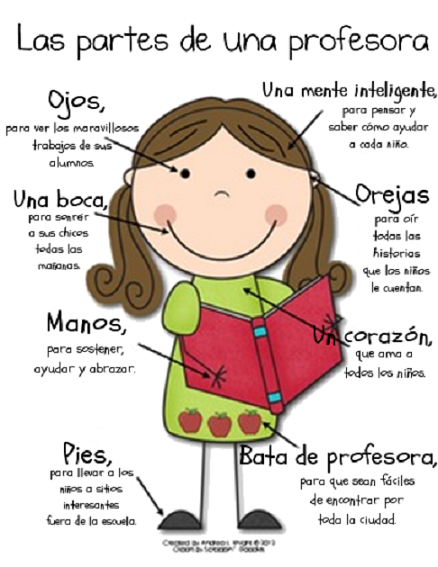
Un análisis exhaustivo ha llevado a la realización de este fantástico gráfico revelando las “grandes capacidades” que hacen que las profesoras sean tan excepcionales, ¿o no?


Writing Task 12

Friday, 1st February 2013

FACTUAL WRITING

Your American friend is visiting you and wants to go and buy some souvenirs for his family. There is a gift shop near your house. Write some directions for your friend telling him how to find it. Say when the shop is open and what he can buy there.


A LOVE MESSAGE ...

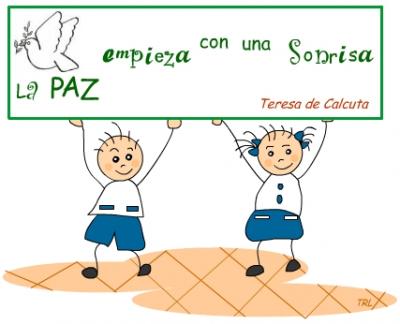
30 de enero: DÍA MUNDIAL DE LA PAZ

Decálogo para hacer la PAZ
Uno
Eres alguien muy importante y único. Quiérete.
Dos
Anima y valora a tus amigos. Comprobarás que les gusta.
Tres
Descubre que ser todos distintos es muy bonito.
Cuatro
Da las gracias y pide las cosas por favor. ¡Es muy fácil!
Cinco
Aprende a escuchar, así comprenderás mejor a los que te rodean.
Seis
Haz tus trabajos lo mejor que puedas. Tu esfuerzo vale la pena.
Siete
Si cumples con tus tareas y encargos, todo funcionará mejor.
Ocho
Trabajando con otros en grupo, conseguirás más que tú solo.
Nueve
Te sentirás feliz si compartes con los demás.
Diez
Si pones PAZ dentro de tí, lo que te rodea tendrá PAZ.

Decálogo para hacer la PAZ
Uno
Eres alguien muy importante y único. Quiérete.
Dos
Anima y valora a tus amigos. Comprobarás que les gusta.
Tres
Descubre que ser todos distintos es muy bonito.
Cuatro
Da las gracias y pide las cosas por favor. ¡Es muy fácil!
Cinco
Aprende a escuchar, así comprenderás mejor a los que te rodean.
Seis
Haz tus trabajos lo mejor que puedas. Tu esfuerzo vale la pena.
Siete
Si cumples con tus tareas y encargos, todo funcionará mejor.
Ocho
Trabajando con otros en grupo, conseguirás más que tú solo.
Nueve
Te sentirás feliz si compartes con los demás.
Diez
Si pones PAZ dentro de tí, lo que te rodea tendrá PAZ.

Writing Task 11

Friday, 25th January 2013

CORRESPONDENCE

Last week you played a new sport for the first time. Write a letter to your English penfriend about the sport. Say what equipment is necessary and tell him what you like and dislike about the sport.


DIGESTION and RESPIRATION - Questions

  1. What is a cell? What are the main functions it perform?
  2. What do groups of cell form? Name and explain what the functions of the different tissues?
  3. What do groups of tissues form? Name five of them.
  4. What do groups of organs form? Name a few of them.
  5. What are the basic life processes different organs perform? Classify the systems each basic life process belong to.
  6. Which are the parts of the digestive system? Name them in order.
  7. Where does digestion start? Explain it.
  8. How many parts has the small intestine got?
  9. Which part of the body produces saliva?
  10. Where does the body store bile?
  11. Define: bolus, chyme and chyle.
  12. What are the five most important nutrients for our body. Explain why each one is important.
  13. Which food contains fat? How many portions should we eat a day?
  14. What do pasta and bread contain? How many portions should we eat a day?
  15. Which foods have got lots of proteins in? How many portions should we eat a day?
  16. Which foods have got lots of vitamins in? How many portions should we eat a day?
  17. What does a healthy diet include?
  18. Which are the parts of the respiratory system? Name them in order.
  19. Which are the two actions breathing includes? Name and explain them.
  20. Name and explain the exchange of gases that occurs when breathing.


Build a Digestive System

The digestive systems of humans and bison are adapted to their diet.

Can you reassemble in the proper order the different components of their systems?

Gallery interactives