Blogia

Our 6th grade Blog

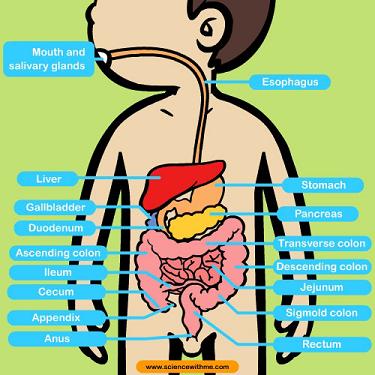
THE DIGESTIVE SYSTEM

THE DIGESTIVE SYSTEM

Do you want to learn more about the digestive system while having fun?

Click on any of the following links to play quiz games:


Digestive Organs Quiz #1

Digestive Organs Quiz #2

Quiz on Nutrition #1

Quiz on Nutrition #2

Interesting Facts about Digestion

Label the Diagram of Digestive System

Vocabulary Game: Digestive System


CANCIÓN DÍA DE LA PAZ

SEGUIREMOS (Macaco)

Di si (oh oh) seguiremos (oh oh) 
Si dicen perdido yo digo buscando, 
Si dicen no llegas de puntillas alcanzamos, 
Y sí (oh oh) seguiremoos (oh oh). 
Si dicen caíste yo digo me levanto 
Si dicen dormido es mejor soñando 

Entre unos y otros ahí estás tú 
Somos los mismos somos distintos 
Pero nos llaman multitud. 
Perdonen que no me levante 
Cuando digan de frente y al paso 
No somos tropas no somos soldados 
Mejor gotas sobre olas flotando. 

Y si (oh oh) seguiremos (oh oh) 
Si dicen perdido yo digo buscando, 
Si dicen no llegas de puntillas alcanzamos, 
Y sí (oh oh) seguiremoos (oh oh). 
Si dicen caíste yo digo me levanto 
Si dicen dormido es mejor soñando 

Perdonen que no me aclere 
En medio de este mar enturbiado 
Nos hicieron agua trasparente 
No me ensucien mas, 
Yo ya me he manchado. 
y es que hay una gran diferencia 
entre pensar y soñar 
yo soy de lo segundo 
En cada segundo vuelvo a empezar. 

Y sí (oh oh) seguiremos (oh oh) 
Si dicen perdido yo digo buscando, 
Si dicen no llegas de puntillas alcanzamos, 
Y sí (oh oh) seguiremoos (oh oh). 
Si dicen caíste yo digo me levanto 
Si dicen dormido es mejor soñando 

Hoy sabemos que lo importante es soñar, liberar nuestro 
inconsciente, el filtro de censura del pensamiento, creemos 
que al soñar perdemos un 
tercio de nuestra vida, y nos equivocamos. (voz en off) 

Y si (oh oh) seguiremos (oh oh) 
Si dicen perdido yo digo buscando, 
Si dicen no llegas de puntillas alcanzamos, 
Y sí (oh oh) seguiremoos (oh oh). 
Si dicen caíste yo digo me levanto 
Si dicen dormido es mejor soñando 
Si dicen caíste yo digo me levanto 
Si dicen dormido es mejor soñando 

Hoy sabemos que lo importante es soñar (voz en off)

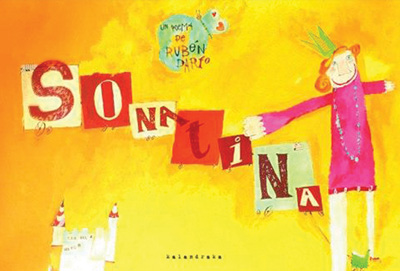
146º aniversario del nacimiento de Rubén Dario

SONATINA

La princesa está triste... ¿qué tendrá la princesa? 
Los suspiros se escapan de su boca de fresa,
que ha perdido la risa, que ha perdido el color.
La princesa está pálida en su silla de oro,
está mudo el teclado de su clave de oro;
y en un vaso olvidado se desmaya una flor.

El jardín puebla el triunfo de los pavos-reales.
Parlanchina, la dueña dice cosas banales,
y, vestido de rojo, piruetea el bufón.
La princesa no ríe, la princesa no siente;
la princesa persigue por el cielo de Oriente
la libélula vaga de una vaga ilusión.

¿Piensa acaso en el príncipe del Golconsa o de China,
o en el que ha detenido su carroza argentina
para ver de sus ojos la dulzura de luz?
¿O en el rey de las Islas de las Rosas fragantes,
o en el que es soberano de los claros diamantes,
]o en el dueño orgulloso de las perlas de Ormuz?

¡Ay! La pobre princesa de la boca de rosa
quiere ser golondrina, quiere ser mariposa,
tener alas ligeras, bajo el cielo volar,
ir al sol por la escala luminosa de un rayo,
saludar a los lirios con los versos de mayo,
o perderse en el viento sobre el trueno del mar.

Ya no quiere el palacio, ni la rueca de plata,
ni el halcón encantado, ni el bufón escarlata,
ni los cisnes unánimes en el lago de azur.
Y están tristes las flores por la flor de la corte;
los jazmines de Oriente, los nulumbos del Norte,
de Occidente las dalias y las rosas del Sur.

¡Pobrecita princesa de los ojos azules!
Está presa en sus oros, está presa en sus tules,
en la jaula de mármol del palacio real,
el palacio soberbio que vigilan los guardas,
que custodian cien negros con sus cien alabardas,
un lebrel que no duerme y un dragón colosal.

¡Oh quién fuera hipsipila que dejó la crisálida!
(La princesa está triste. La princesa está pálida)
¡Oh visión adorada de oro, rosa y marfil!
¡Quién volara a la tierra donde un príncipe existe
(La princesa está pálida. La princesa está triste)
más brillante que el alba, más hermoso que abril!

¡Calla, calla, princesa dice el hada madrina,
en caballo con alas, hacia acá se encamina,
en el cinto la espada y en la mano el azor,
el feliz caballero que te adora sin verte,
y que llega de lejos, vencedor de la Muerte ,
a encenderte los labios con su beso de amor!

 

Félix Rubén García Sarmiento, conocido como Rubén Darío (18 de enero de 1867 - 6 de febrero de 1916), fue un poeta nicaragüense, máximo representante del modernismo literario en lengua española. Es posiblemente el poeta que ha tenido una mayor y más duradera influencia en la poesía del siglo XX en el ámbito hispánico. Es llamado príncipe de las letras castellanasLee más...


What is a System?

Complexity of systems compared to cellsA system is a group of organs that work together and provide an organism with an advantage for survival. It is the most complex organization in your body and the final level of the progression from cells to tissues to organs and then systems. Systems work alone and with other systems to allow your body to maintain homeostasis. Homeostasis  is a stable internal environment that allows you (and your cells) to survive. 

While every one of your systems is needed to survive, your nervous system is the most important as you continue reading this page. Your eyes and brain are reading these words and remembering all of the information about systems. If you think about it, you are also using your muscular system to help move your eyes, pupils, and keep your head up. 

Organs Working Together

Organs are a part of every system. Your heart is classified as an organ and it is a part of the circulatory system. Organs can work within several systems of your body. Many organs also have specific cells or tissues that have different functionality. Your kidneys are not only a part of your excretory system; they also have specific parts that serve the endocrine system. 

You, and many advanced mammals, have similar organs and systems. However, there is a wide variety of organ types found throughout the animal kingdom. Some aquatic animals have organs that remove salts from salt water and an animal like a cow might have multiple stomachs in the digestive system. 

Systems Can’t Work Alone

Systems connect to other systemsWe just explained how organs could be a part of several systems. Similarly, systems rarely work alone. All of the systems in an organism are interconnected. A simple example is the connection between the circulatory and respiratory systems. As blood circulates through your body, it eventually needs fresh oxygen (O2) from the air. When the blood reaches the lungs, part of the respiratory system, the blood is re-oxygenated. Your stomach, part of the digestive system, constantly interacts with your endocrine system and spreads hormones throughout your body.
TEST YOUR ENGLISH

Test your English with this quick, free online test. It will give you an idea of your English level.

Click ’start’ and answer each of the questions.

  • There are 20 multiple-choice questions.
  • There is no time limit.
  • You will be able to see answers at the end of the test.

Please note: This is not a Cambridge ESOL exam and the test scores and levels are very approximate.

THE PASSIVE FORM

Sentences can be active or passive. Therefore, tenses also have "active forms" and "passive forms." You must learn to recognize the difference to successfully speak English.

Active Form

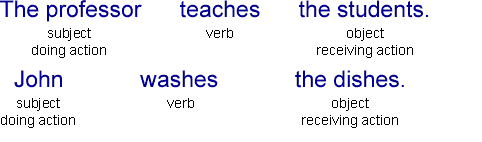
In active sentences, the thing doing the action is the subject of the sentence and the thing receiving the action is the object. Most sentences are active.

[Thing doing action] + [verb] + [thing receiving action]

Examples:

Passive Form

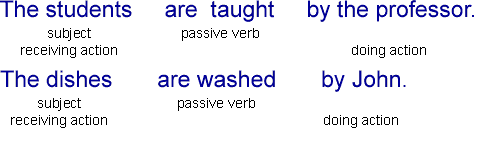
In passive sentences, the thing receiving the action is the subject of the sentence and the thing doing the action is optionally included near the end of the sentence. You can use the passive form if you think that the thing receiving the action is more important or should be emphasized. You can also use the passive form if you do not know who is doing the action or if you do not want to mention who is doing the action.

When rewriting active sentences in passive voice, note the following:

  • the object of the active sentence becomes the subject of the passive sentence
  • the finite form of the verb is changed (to be + past participle)
  • the subject of the active sentence becomes the object of the passive sentence (or is dropped)

[Thing receiving action] + [be] + [past participle of verb] + [by] + [thing doing action]

Examples:

Active / Passive Overview

 ActivePassive
Simple Present
Once a week, Tom cleans the house.
Once a week, the house is cleaned by Tom.
Present Continuous
Right now, Sarah is writing the letter.
Right now, the letter is being written by Sarah.
Simple Past
Sam repaired the car.
The car was repaired by Sam.
Past Continuous
The salesman was helping the customer when the thief came into the store.
The customer was being helped by the salesman when the thief came into the store.
Present Perfect
Many tourists have visited that castle.
That castle has been visited by many tourists.
Present Perfect Continuous
Recently, John has been doing the work.
Recently, the work has been being done by John.
Past Perfect
George had repaired many cars before he received his mechanic’s license.
Many cars had been repaired by George before he received his mechanic’s license.
Past Perfect Continuous
Chef Jones had been preparing the restaurant’s fantastic dinners for two years before he moved to Paris.
The restaurant’s fantastic dinners had been being prepared by Chef Jones for two years before he moved to Paris.
Simple Future
will
Someone will finish the work by 5:00 PM.
The work will be finished by 5:00 PM.
Simple Future
be going to 
Sally is going to make a beautiful dinner tonight.
A beautiful dinner is going to be made by Sally tonight.
Future Continuous
will
At 8:00 PM tonight, John will be washing the dishes.
At 8:00 PM tonight, the dishes will be being washedby John.
Future Continuous
be going to
At 8:00 PM tonight, John is going to be washingthe dishes.
At 8:00 PM tonight, the dishes are going to be being washed by John.
Future Perfect
will
They will have completed the project before the deadline.
The project will have been completed before the deadline.
Future Perfect
be going to
They are going to have completed the project before the deadline.
The project is going to have been completed before the deadline.
Future Perfect Continuous
will
The famous artist will have been painting the mural for over six months by the time it is finished.
The mural will have been being painted by the famous artist for over six months by the time it is finished.
Future Perfect Continuous
be going to
The famous artist is going to have been painting the mural for over six months by the time it is finished.
The mural is going to have been being painted by the famous artist for over six months by the time it is finished.
Used to
Jerry used to pay the bills.
The bills used to be paid by Jerry.
Would Always
My mother would always make the pies.
The pies would always be made by my mother.
Future in the Past
Would
I knew John would finish the work by 5:00 PM.
I knew the work would be finished by 5:00 PM.
Future in the Past
Was Going to
I thought Sally was going to make a beautiful dinner tonight.
I thought a beautiful dinner was going to be madeby Sally tonight.


Exercises

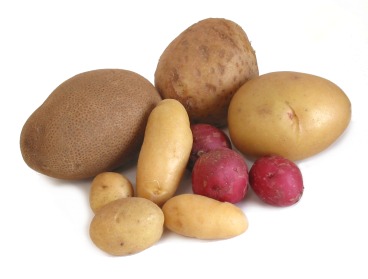
10 facts about potatoes!!!

Did you know...???

  • Potatoes were first eaten more than 6,000 years ago by indigenous people living in the Andes mountains of Peru.
  • The Incas measured time by how long it took for potatoes to cook.
  • Religious leaders denounced the potato because it wasn’t mentioned in the Bible.
  • Potatoes are the world’s fourth food staple - after wheat, corn and rice.
  • Potatoes are grown in more than 125 countries (even in space - in 1995).
  • Every year enough potatoes are grown worldwide to cover a four-lane motorway circling the world six times.
  • China is the world’s largest potatoe producer.
  • Namibians each eat an average of 110 kilograms of potatoes every year - not quite as much as the Germans consume.
  • In 1778 Prussia and Austria fought the Potatoe War in which each side tried to starve the other by consuming their potatoe crop.
  • During the Alaskan Klondike gold rush of the 1890’s, potatoes were so valued for their vitamin C content that miners traded them for gold.


Writing Task 10

Friday, 11th January 2013

FACTUAL WRITING

An older relative recently bought a mobile phone but cannot use it very well. Write some simple instructions for your relative telling her how to send an SMS message.


EUROPEAN UNION - Questions

  1. What is the EU?
  2. When was it created?
  3. What is the main goal of the EU?
  4. When was the European Economic Community created?
  5. Which six countries founded the European Economic Community (EEC) in 1957?
  6. What treaty did the member states of the EEC sign in 1992?
  7. How many member states has the EU got at the moment?
  8. Why has the EU flag got twelve stars?
  9. Which European institution prepares new laws?
  10. When did Spain join the European Economic Community?
  11. Who can participate in the Erasmus programme?
  12. What is the European climate like?
  13. Why are Europeans living longer lives?
  14. What values is European society based on?
  15. Why do people immigrate to the EU?
  16. Which sector of the European economy employs the most people?
  17. Which sector employs the fewest people?
  18. Which country has got the highest percentage of electricity produce from renewable sources of energy?
  19. Which country has got the lowest percentage?
  20. What position does Spain occupy in this list?


EUROPA POLÍTICA

Repasa y estudia la geografía política de Europa a través de estos divertidos juegos interactivos. 


Sergio Cubillas recommends....

5º Cuadernillo de preguntas de cultural general

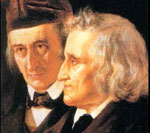
200 aniversario de los cuentos de los hermanos Grimm

Los hermanos GrimmJacob Karl Grimm y Wilhelm Grimm nacieron en Hanau (Alemania) en 1785 y 1786 respectivamente. Eran catedráticos en la especialidad de filología alemana y realizaron extensas investigaciones sobre el folklore de las distintas regiones de su país. [+ Biografía]

  Cuentos de los hermanos Grimm:
 Hansel y Gretel
 El lobo y los siete cabritos
 La alondra cantarina y saltarina 
  Blancanieves y los siete enanitos 
 Los músicos de Bremen 
 El campesino y el diablo
 La liebre y el erizo
 Verdezuela (Rapunzel)
 La oca de oro
 Rumpelstikin
 Pulgarcito 
 El sastrecillo valiente 
 Caperucita Roja 
 La Cenicienta
 Blancanieve y Rojaflor

Writing Task about CHRISTMAS: 6ºA and 6ºC

Friday, 14th December 2012

Creative writing (6ºA)

Write a composition using the following Christmas words:

family                    happiness

mistletoe               peace

reindeer                 be lovely

love                      snowman

happier                  fun

ornaments             January

friends                  star

Christmas carols     snow

Christmas present  Happy Christmas

New Year’s Eve      Christmas tree 


Creative writing (6ºC)

Write a composition using the following Christmas words:

love                       snow             

food                      Santa Claus   

presents                holiday

happiness               thankful            

children                 snowman       

family                    Christmas

star                      ornaments

The Three Wise Men      


SPAIN'S POPULATION - Questions

  1. What is the total population of an area?
  2. What is the real population change? Explain your answer.
  3. How do we calculate the population density?
  4. What type of information do municipal registries keep?
  5. How often is there a national census in Spain?
  6. Why has Spain got a low birth rate?
  7. Why is Spain’s net migration positive?
  8. What is the population density like in large cities?
  9. What is the surface area of Spain?
  10. What is the population density like in Extremadura?
  11. What is the population density like in Madrid?
  12. Which autonomous community has got a bigger population?
  13. Which has got a higher population density?
  14. Where does the rural population live?
  15. Why are there more females than males in Spain?
  16. What percentage of Spaniards live in towns and cities?
  17. Which population group do people over the age of seventy-five belong to?
  18. What is a population pyramid?
  19. When did many Spaniards immigrate to the Americas?
  20. Which group makes up about 13% of the Spanish population?
  21. What should we do when new immigrants arrive in Spain?
  22. How did Spain’s migration patterns change at the end of the 20th century?


DÉJATE AYUDAR


Déjate ayudar,

disfruta de lo que tienes

y de los que te rodean

y SE FELIZ!!

Guiño

Writing Task 9

Wednesday, 5th December 2012

CORRESPONDENCE

Your Irish friend is going to visit your area next month, but cannot decide where to go. Write an email to your friend comparing two different places you know well. Say which one is best for your friend.


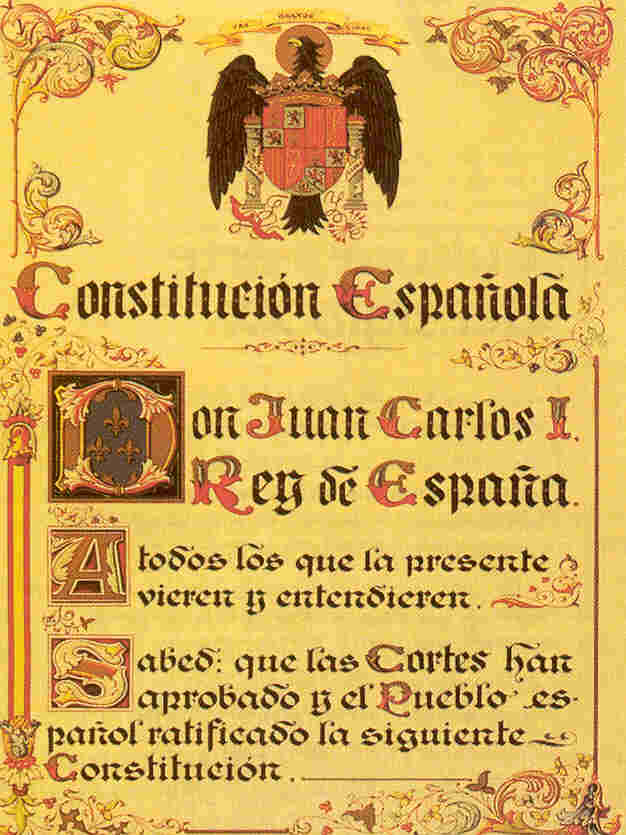
LA CONSTITUCIÓN ESPAÑOLA