SPELLING PRACTICE
Click on the image to have some extra Spelling Practice.

Click on the image to have some extra Spelling Practice.
to be (am, are, is) + going to + infinitive
We are going to sing at the party.
Look at this car! It is going to crash into the yellow one.
| I am going to play handball. I’m going to play handball. | You are going to play handball. You’re going to play handball. |
| I am not going to have a picnic. I’m not going to have a picnic. | You are not going to have a picnic. You’re not going to have a picnic. You aren’t going to have a picnic. |
| Am I going to have a picnic? | Are you going to have a picnic? |
ATTENTION!!
Do not mix up with the Present Continuous!
| going to-future | Present Continuous |
|---|---|
| He’s going to read the book. | He’s reading the book. |
In English, there are many ways of expressing future time. One of the most common is using the modal auxiliary verb “will”. This page will explain the main meanings of “will” and show you how to form the future with “will”.
“Will”, like all modal verbs in English, does not change its form, and it is followed by the simple form of the main verb. “Will” is NOT usually used in first person questions. Note also that willis often shortened to ’ll. This diagram should make the situation clearer:
| Subject | Statement | Question |
|---|---|---|
| I | I will stop smoking. I’ll stop smoking. | [not usually used] |
| You | You will stop smoking. You’ll stop smoking. | Will you stop smoking? |
| He | He will stop smoking. He’ll stop smoking. | Will he stop smoking? |
| She | She will stop smoking. She’ll stop smoking. | Will she stop smoking? |
| It | It will be hard to stop. It’ll be hard to stop. | Will it be hard to stop? |
| We | We will stop smoking. We’ll stop smoking. | [not usually used] |
| They | They will stop smoking. They’ll stop smoking. | Will they stop smoking? |
Negatives are formed with “will not” or “won’t”:
He will not stop smoking.
He won’t stop smoking.
“Will” is usually used in three situations:
| Situation | Example |
|---|---|
| Volunteering to do something | “Will someone open the window for me?” “I’ll do it!” |
| Deciding to do something | “I’ve made up my mind. I’ll go to Whistler for my vacation.” |
| Forcing someone to do something. | “Dad, I don’t want to clean my room!” “You’ll do it, and you’ll do it NOW!” |
“Will” is NOT usually used for fixed plans or scheduled events.
When you are sure that you understand the lesson, you can continue with the exercises (click on the image).


Welcome to the free learner resources based around the London 2012 Games made by the British Council. You can practise your English as you learn about the London 2012 Games and the Olympic and Paralympic history, learn all about Olympic and Paralympic sports, and values. Play games, watch videos, read articles, and do interactive exercises. |
It’s time for a spelling bee!
Try to spell these words.
Good luck!!

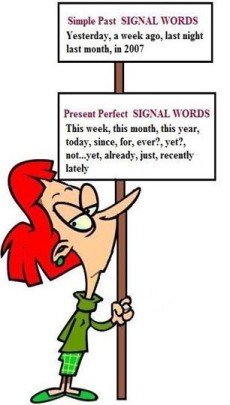
Simple Past | Present Perfect Simple |
|---|---|
Irregular verbs: see 2nd column of irregular verbs Example: I spoke | Irregular verbs: have/has + 3rd column of irregular verbs Example: I / you / we / they have spoken.he / she / it has spoken |
Regular verbs: have/has + infinitive + ed Example: I / you / we / they have workedhe / she / it has worked
| |
Exceptions when adding ’ed’:
| |
In British English, the use of Simple Past and Present Perfect is quite strict. As soon as a time expression in the past is given, you have to use Simple Past. If there are no signal words, you must decide if we just talk about an action in the past or if its consequence in the present is important.
Certain time in the past or just / already / yet?
Do you want to express that an action happened at a certain time in the past (even if it was just a few seconds ago) or that an action has just / already / not yet happened?
| Simple Past | Present Perfect Simple |
|---|---|
certain time in the past Example: I phoned Mary 2 minutes ago. | just / already / not yet Example: I have just phoned Mary. |
Do you want to express when a certain action took place or whether / how often an action has happened till now?
| Simple Past | Present Perfect Simple |
|---|---|
certain event in the past Example: He went to Canada last summer. | whether / how often till now Example: Have you ever been to Canada? I have been to Canada twice. |
Do you just want to express what happened in the past? Or do you want to emphasise the result (a past action’s consequence in the present)?
| Simple Past | Present Perfect Simple |
|---|---|
Emphasis on action Example: I bought a new bike. (just telling what I did in the past.) | Emphasis on result Example: I have bought a new bike. (with this sentence I actually want to express that I have a new bike now.) |
| Simple Past | Present Perfect Simple |
|---|---|
|
|
| Simple Past | Present Perfect Simple |
|---|---|
| certain event in the past Example:He went to Canada last summer. | whether / how often till now Example:Have you ever been to Canada? / I have been to Canada twice. |
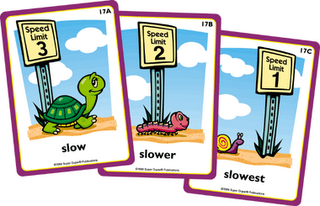
Although is Easter and is time for holidays and relax, here you have some homework to practise your oral exam.
Hi children !!
Here you can sing our Saint Valentine´s songs.
Enjoy them. Have a good weekend.
And do not forget to study science.
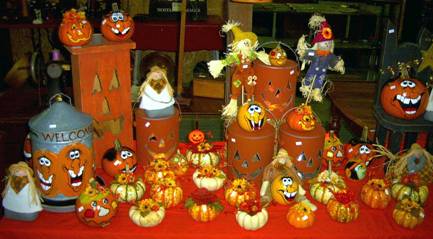
(All–Hallows–Evening) proviene de la tradición celto-irlandesa con la que se celebraba el final del verano y de la época de recolección, momento en que se recordaba a los seres queridos ya fallecidos (para nosotros el Día de Todos los Santos). En algunos países, para acercar esta fiesta a los niños, se adquirió la costumbre de que éstos fueran pidiendo caramelos por las casas.
Como ya es habitual en nuestro colegio, buscando acercar la cultura anglosajona a nuestros alumnos a un nivel no sólo educativo sino también lúdico, durante esta última semana de octubre celebraremos, un año más, la festividad de Halloween. Para darle un toque más divertido os proponemos que el viernes 29 los niños vengan vestidos de negro o azul marino para recordar la noche y/o naranja para recordar las calabazas. También pueden traer para tomar en el recreo una fruta de color naranja.
Este año haremos también un concurso de calabazas decoradas, por lo que os animamos a ayudar a vuestros hijos a decorar su propia calabaza y participar en un terrorífico concurso en el que se premiará la calabaza más divertida, la más elegante y la más aterradora. Deberán traerla al colegio cualquier día de esta semana. Y ya sabéis que si vaciáis la calabaza con lo que os sobre podéis hacer ¡¡una deliciosa tarta de Halloween!!
WHAT DO YOU KNOW ABOUT IRELAND?
IT´S A WONDERFUL COUNTRY, AN ISLAND VERY NEAR GREAT BRITAIN, ALL GREEN WITH NICE PEOPLE.
NEXT 17TH OF MARCH, THEY WILL CELEBRATED THEIR PATRON SAINT " SAINT PATRICK´S" AND THIS IS THE HISTORY.
HAPPY DAY TO EVERYBODY!!! 
HERE YOU HAVE A FANTASTIC POEM FROM GRADE 3 C
POEM:
FRIENDS ARE FUN
TEACHERS ARE GOOD
THE SCHOOL IS NICE
AND I LOVE YOU !
3ºC
· For All you Maid Marian fans
Danny John-Jules has performed many songs written for 'Maid Marian And Her Merry Men' - a comical children's adaptation of the Robin Hood tale - in his guise as Barrington, the First Rastafarian. This song opens the episode, 'A Game Called John'.
It's pancake day
Yes, it's pancake day
Yes, it's p-p-p-p-p-p-p-p-pancake day
Well, it's pancake day
It's really pancake day
Yes, it's p-p-p-p-p-p-p-p-pancake day
Now the Merry Men know about pancake making
'cause pancake day is a regular fixture
You take your frying pan, and some sugar and jam
And get on down to make the mixture
Well you take a dozen eggs, take a cup of milk
And don't forget to add a little flour
And then you beat it up with a wooden spoon
And leave it to settle for just one hour
'cause it's pancake day
Yes, it's pancake day
Yes, it's p-p-p-p-p-p-p-p-pancake day
Well, it's pancake day
It's crucial pancake day
Yes, it's p-p-p-p-p-p-p-p-pancake day
But back in the village of Worksop
Where the living ain't so funny
They make their pancakes out of dirty old mud
'cause they ain't got no flipping money
Their smiles are wide, 'cause the tears they hide
Even though their life is hell
But the smiles start to fall, when the sheriff comes to call
And he brings King John as well
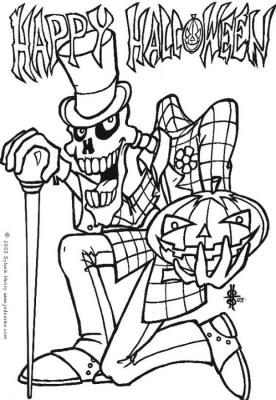
HELLO KIDS!
HALLOWEEN IS COMING SOON , THE NEXT 31 st of october.
HERE YOU HAVE THE SKELETON SONG. ENJOY IT!
HERE WE ARE !
We are so happy to see our new students.
This is for uuuuuuuuuuuuuuuuuuuuuuuuuuuuuuu!!!