
28 de mayo: DÍA NACIONAL DE LA NUTRICIÓN
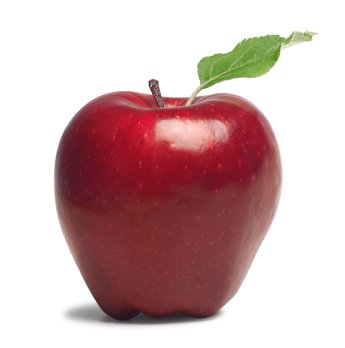
El lunes, 28 de mayo celebramos en España el “Día Nacional de la Nutrición”. Es una iniciativa de la Federación Española de Sociedades de Nutrición, Alimentación y Dietética (FESNAD) en colaboración con otras instituciones y con el apoyo de la industria farmacéutica y alimentaria.
Este año se celebrará la XI edición, resaltando el papel que puede desempañar la familia en la adquisición de los buenos hábitos alimentarios.
En nuestro colegio y con la colaboración de la empresa de comedor “Alirsa S.L.” nos proponemos colaborar en la difusión y concienciación al alumnado de la importancia de una correcta nutrición. Por ello, el lunes tomaremos un almuerzo saludable.
Repartiremos a todos los niños, a la hora del recreo, una manzana. Ese día no es necesario que traigáis otro desayuno de casa.
Confiamos que la iniciativa os parezca adecuada, ya que una buena alimentación no es siempre sinónimo de una buena nutrición, y es ésta la que garantiza realmente una salud de calidad en las personas.
¡Celebremos el 28 de mayo el DÍA MUNDIAL DE LA NUTRICIÓN y apostemos por una salud integral!
¡¡ENHORABUENA DIEGO!!!
Tenemos el placer de comunicaros que en el Concurso de Narración de la Comunidad de Madrid nuestro centro ha quedado en tercer lugar gracias al buen trabajo realizado por DIEGO HERRERO BARBERO de 5º B.
¡¡Enhorabuena Diego!!!!
¡¡Estamos muy orgullosos de ti!!!

I CONCURSO ESCOLAR DE PORTADA Y CONTRAPORTADA

BASES:
I.- El C.E.I.P. Virgen de Navalazarza convoca el I Concurso Escolar de dibujos para elegir su “Portada y Contraportada de la Agenda Escolar para el curso 2012/13”.
II.- Los dibujos serán originales e inéditos y el tema que se propone es libre.
Se podrá realizar con rotuladores, pinturas, plastidecores o ceras.
En la portada debe aparecer un recuadro donde posteriormente se insertará el escudo del colegio y en la contraportada otro para poner la mascota “Pico Listo”.
III.- Los originales deberán estar elaborados a color y en cartulina blanca formato A4.
IV.- Podrá participar cualquier alumno/a de Educación Primaria del colegio.
V.- Se establecen dos premios:
1er premio: portada
2º premio: contraportada
VI.- Los premios serán:
1er premio: un vale de 80 euros y un diploma
2º premio: un vale de 50 euros y un diploma
Los vales se podrán canjear en cualquiera de las papelerías del municipio antes del 30 de junio.
VII.- Las ilustraciones se entregarán en la Dirección del centro con el nombre, apellidos y grupo escritos a lápiz en la parte posterior.
VIII.- El plazo de admisión de dibujos finalizará el lunes 28 de mayo a las 14:00 horas.
IX.- El jurado lo formarán todos los miembros de la Comisión de Coordinación Pedagógica del colegio. El fallo del jurado será inapelable y se dará a conocer el 4 de junio.
X.- Todas las ilustraciones presentadas participarán en una exposición colectiva en el corcho de entrada al centro. Los trabajos presentados pasarán a ser propiedad del C.E.I.P. Virgen de Navalazarza que se reserva el derecho a su impresión o difusión sin ánimo de lucro.
XI.- La participación en este concurso implica la total aceptación de estas bases.
Cualquier imprevisto que no esté recogido en la presente convocatoria será interpretado y resuelto por el jurado.
Physical and Chemical Properties of Matter
Each phase of matter has its own chemical and physical properties.
Phases of Matter
The phases of matter are:
- Solid – which has a definite shape and volume
- Liquid – which has a definite volume, but can change shape
- Gas - the shape and volume of a gas can change
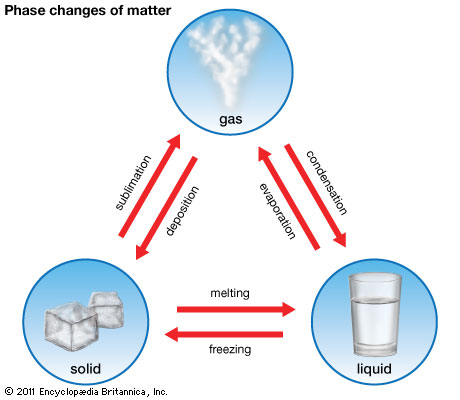
Phase Changes of Matter
There are several ways in which phases of matter can change from one to another:
- Melting - melting occurs when a substance changes from a solid to a liquid
- Boiling - boiling is when a substance changes from a liquid to a gas
- Condensing - condensation is when a gas changes to a liquid
- Freezing - freezing is when a liquid changes to a solid
Classes of Changes in Matter
The changes that take place in substances may be categorized in two classes:
- Physical Change – a new substance is not produced and just the physical properties are changed. For example - phase changes, or crushing a can
- Chemical Change – a new substance is produced with different chemical properties. For example: burning, rusting, and photosynthesis.
Solutions
Sometimes, when two or more substances are combined it results in a solution. Making a solution can produce either a physical or chemical change. When there’s a physical change in a solution, the original substances can be separated from one another. If a chemical change takes place while creating a solution, the original substances cannot be separated from one another.
Physical and Chemical Properties of MatterEach phase of matter has its own chemical and physical properties.
This is not only the making off of the new bag of Imaginarium, but also a tutorial of great Arts and Crafts ideas and different techniques that you can all try at home. 
Changes of matter
Click on the image to see videos and play games related to the States of Matter.
States of Matter
There are five main states of matter. Solids, liquids, gases, plasmas, and Bose-Einstein condensates are all different states of matter. Each of these states is also known as a phase. Elements and compounds can move from one phase to another phase when special physical forces are present. One example of those forces is temperature. The phase or state of matter can change when the temperature changes. Generally, as the temperature rises, matter moves to a more active state.

Phase describes a physical state of matter. The key word to notice is physical. Things only move from one phase to another by physical means. If energy is added (like increasing the temperature or increasing pressure) or if energy is taken away (like freezing something or decreasing pressure) you have created a physical change.

One compound or element can move from phase to phase, but still be the same substance. You can see water vapor over a boiling pot of water. That vapor (or gas) can condense and become a drop of water. If you put that drop in the freezer, it would become a solid. No matter what phase it was in, it was always water. It always had the same chemical properties. On the other hand, a chemical change would change the way the water acted, eventually making it not water, but something completely new.
MATTER WEBQUEST
Do you want to complete this Webquest about Matter?
Click on the image to start.

HAPPY MOTHER'S DAY!!!!!
Mother’s Day is a celebration honoring mothers and celebrating motherhood, maternal bonds and the influence of mothers in society. It is celebrated on various days in many parts of the world, yet most commonly in March, April, or May.

A COMMENT FROM...
Irene (5ºA) wants to share this information with all of you:
I found information about the state of light and the state of sound. Did you know light could be in a solid state? It’s a type of lightning which uses semiconductor light-emitting diodes (OLED) or polymer light-emitting diodes (PLED) as sources of illumination on rather than electrical filaments, plasma, or gas.
What state of matter does sound travel the fastest? Solids transmit sounds fastest, and farther. The more dense the material is, the better sound could be counducted.
Temperature also affects the speed of sound.
(I know this is a little bit complicated, but I love Science!)
Thank you Irene!!!
Learning to be happy, a video that cheers you up.
BE HAPPY!!
No matter what happens around you.
HAVE A NICE LONG WEEKEND!!

PERSONAL ACCOUNT: Steps to follow
These are the steps you have to follow when writing Your Personal Account:
1- Title.
2- Introduction (1st paragraph).
3- Who was with you when the event happened (2nd paragraph).
4- The body of the problem (3rd paragraph).
5- What happened in the end, how people felt, and what you have learnt (4th paragragh).
* DO NOT FORGET TO USE THE PAST TENSE.

132th Birthday of Gideon Sundback
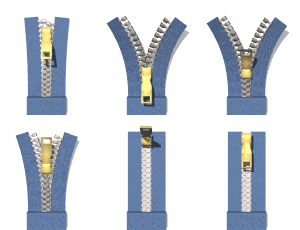
Gideon Sundback (April 24, 1880 – June 21, 1954) was a Swedish-American electrical engineer. Gideon Sundbäck is most commonly associated with his work in the development of the zipper.
Sundback made several advances in the development of the zipper between 1906 and 1914, while working for companies that later evolved into Talon, Inc. He built upon the previous work of other engineers such as Elias Howe, Max Wolff, and Whitcomb Judson.

A zipper is a thingy that joins two pieces of material together.
The zipper is used everywhere, on clothing, pencil cases, boots and suitcases, wallets, and many other things.
How many can you think of?
THE THREE STATES OF MATTER
23rd April: WORLD BOOK and COPYRIGHT DAY

Theme for 2012: Books and Translation
23 April is a symbolic date for world literature for on this date in 1616, Cervantes, Shakespeare and Inca Garcilaso de la Vega all died. It is also the date of birth or death of other prominent authors such as Maurice Druon, Haldor K.Laxness, Vladimir Nabokov, Josep Pla and Manuel Mejía Vallejo.
It was a natural choice for UNESCO’s General Conference, held in Paris in 1995, to pay a world-wide tribute to books and authors on this date, encouraging everyone, and in particular young people, to discover the pleasure of reading and gain a renewed respect for the irreplaceable contributions of those who have furthered the social and cultural progress of humanity. In this respect, UNESCO created both the World Book and Copyright Day and the UNESCO Prize for Children’s and Young People’s Literature in the Service of Tolerance.
The year 2012 also marks the 80th anniversary of the Index Translationum. This international bibliography of translation provides a unique tool for the monitoring of translation flows in the world. UNESCO will celebrate this anniversary by organizing a debate on this instrument.
Visit the following websites related to BOOK DAY:
Shakespeare for kids: "To be or not to be-that is the que." Choose a game or activity from the signs at the left. Have fun coloring pictures, solving mazes, and ...
Miguel de Cervantes Saavedra: Dedicado a la biografía y bibliografía de este escritor universal.
Garcilaso de la Vega: La página de Garcilaso en Internet. Promovida por la Asociación de Amigos de Garcilaso de la Vega.
World Book Day: Official site of the yearly event. Introduces the day, lists events, and lists book recommendations. Also pictures of past events.
22 de abril: DÍA DE LA TIERRA ¿Qué estás haciendo para cuidar el planeta?
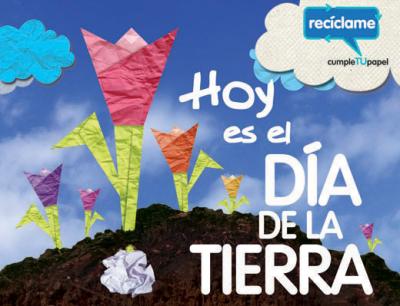
Nunca es tarde para crear conciencia
Hace 40 años, un 22 de abril de 1970, el senador estadounidense Gaylord Nelson proponía la declaración del Día de la Tierra, una jornada ambientalista destinada a crear conciencia ante los peligros de la contaminación global que amenazan al planeta Tierra.
La década del ‘70 marcó el inicio de una verdadera lucha política por parte de los ambientalistas, quienes fueron radicalizando cada vez más sus discursos ante la falta de respuestas por parte de los gobernantes.
El siglo XXI recibió el conflicto ambientalista con niveles altamente politizados, alejándose muchas veces de la ciencia. Durante estas décadas, no faltaron ocasiones donde muchos militantes se autoproclamaron ecologistas; o, muchos ecologistas, con el objetivo de cambiar las políticas de contaminación global, distorsionaron estudios científicos para elevar la alarma sobre la sociedad y las clases dirigentes.
El Día de la Tierra forma parte de esta historia de lucha y militancia. Por eso, en este día que pretende homenajear a la Tierra, no está de más que alguien mencione, desde la objetividad de la ciencia, qué es lo que la hace tan especial en el Universo entero. Y también, por qué no, qué es lo que la hace única desde la subjetividad humana.
El descubrimiento de exoplanetas (planetas fuera de nuestro Sistema Solar) es un campo relativamente nuevo dentro de la astronomía. El primer planeta extrasolar fue descubierto apenas hace 15 años, y desde entonces se fueron encontrando indicios de unos 451 planetas orbitando otras estrellas.
La cifra podría parecer a simple vista alentadora, teniendo en cuenta los pocos años transcurridos desde el primer descubrimiento. Pero lo cierto es que la gran mayoría de estos planetas son gaseosos, o directamente enanas marrones (gigantescos Júpiters). Si bien se descubrieron indicios de planetas sólidos como la Tierra, cualquier ilusión de siquiera saber algo más de ellos pertenece al campo de la ciencia ficción.
Un lugar privilegiado
Por lo que sabemos, la Tierra es un lugar realmente especial, no sólo dentro del Sistema Solar, sino en el Universo entero. Para que la vida se desarrolle y sobreviva, se tiene que dar una combinación de fenómenos prebióticos increíblemente inusual.
Ante esta verdad atronadora, el astrónomo probablemente sea el ambientalista más convencido de todos. ¿Cómo no serlo, conociendo las distancias que lo separan de cualquier alternativa desconocida, y sabiendo que está pisando un planeta verdaderamente perfecto?
La singularidad científica de la Tierra, su especial ubicación respecto al Sol, la existencia de elementos sólidos y líquidos, la creación de una atmósfera protectora, y un sinfín de factores hacen de nuestro planeta un escenario irrepetible para la vida.
Pero es también la incapacidad humana de optar por cualquier otra posible alternativa planetaria lo que probablemente encienda la preocupación de la mayoría de los ambientalistas, en su mayoría centrados en la supervivencia de los hombres y mujeres y de algunos animales.
En este sentido, probablemente no existan mejores palabras para “crear conciencia” en este mal llamado Día de la Tierra que las reflexiones del gran Carl Sagan.
Carl Sagan no era ni ecologista, ni ambientalista, ni militante: era un astrofísico que se refería magistralmente al planeta Tierra como un pequeño y pálido punto azul, perdido en el medio de la nada.
Por esta razón, cabe preguntar: ¿Qué piensas hacer en este Día de la Tierra? ¿Comenzarás finalmente a reciclar lo que descartas como basura? o ¿dejarás de usar tanto plástico? ¿O consumirás menos electricidad?
La respuesta está en cada uno de nosotros. La Tierra depende de nuestras decisiones. Si son las correctas, la tendremos por mucho tiempo más. Si no hacemos nada, o hacemos lo incorrecto, su futuro está en peligro. Y el nuestro también.
Matter is the Stuff Around You
 Matter is everything around you. Matter is anything made of atoms and molecules. Matter is anything that has a mass. Matter is also related to light and electromagnetic radiation. Even though matter can be found all over the universe, you usually find it in just a few forms. As of 1995, scientists have identified five states of matter. They may discover one more by the time you get old.
You should know about solids, liquids, gases, plasmas, and a new one called Bose-Einstein condensates. The first four have been around a long time. The scientists who worked with the Bose-Einstein condensate received a Nobel Prize for their work in 1995. But what makes a state of matter? It’s about the physical state of molecules and atoms.
Do you want to know more about matter? Click here.
An awesome song about the states of matter!
FIRST CONDITIONAL
IF + SUBJECT + PRESENT SIMPLE , SUBJECT + WILL + INFINITIVE
SUBJECT + WILL + INFINITIVE + IF + SUBJECT + PRESENT SIMPLE
We use the First Conditional to talk about future events that are likely to happen.
- If we take John, he’ll be really pleased.
- If you give me some money, I’ll pay you back tomorrow.
- If they tell us they want it, we’ll have to give it to them.
- If Mary comes, she’ll want to drive.
The ’if’ clause can be used with different present forms.
- If I go to New York again, I’ll buy you a souvenir from the Empire State Building.
- If he’s feeling better, he’ll come.
- If she hasn’t heard the bad news yet, I’ll tell her.
The "future clause" can contain ’going to’ or the future perfect as well as ’will’.
- If I see him, I’m going to tell him exactly how angry I am.
- If we don’t get the contract, we’ll have wasted a lot of time and money.
The "future clause" can also contain other modal verbs such as ’can’ and ’must’.
- If you go to New York, you must have the cheesecake in Lindy’s.
- If he comes, you can get a lift home with him.