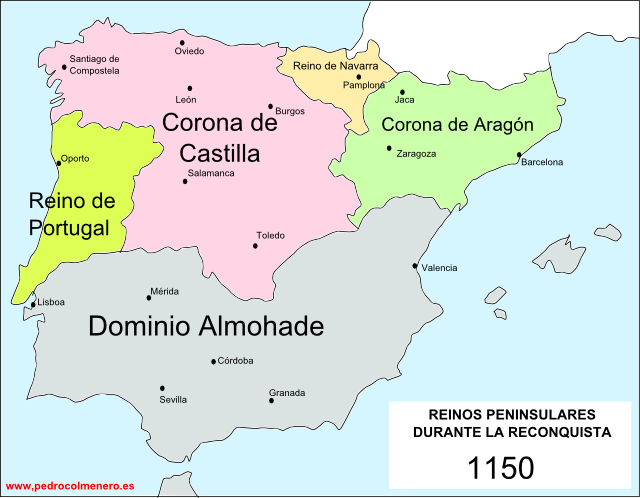
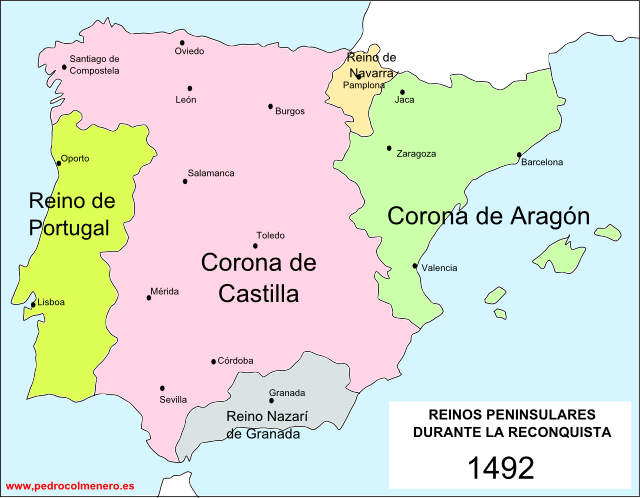
The IBERIAN PENINSULA during THE MIDDLE AGES
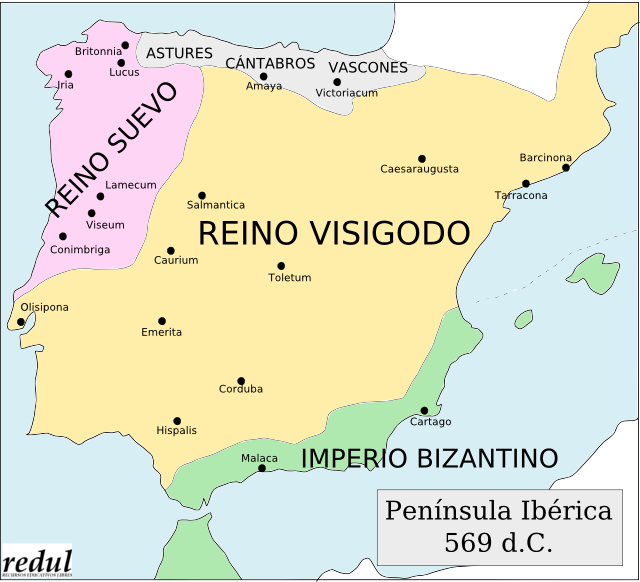
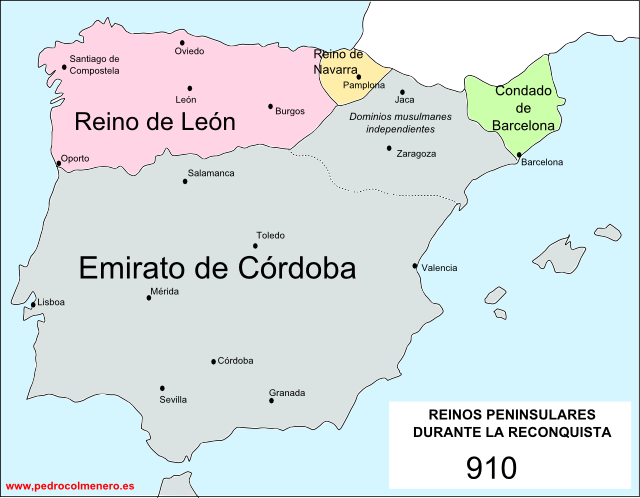
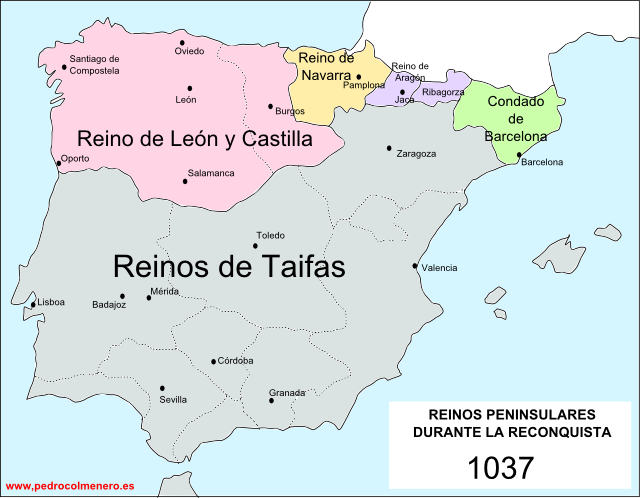
Ten Fast Facts about THE MIDDLE AGES
1. The Middle Ages refers to a time in European history from 400-1500 AD. It occurred between the fall of the Roman Empire and the discovery of America (beginning of the Renaissance).
2. Historians usually divide the Middle Ages into three smaller periods called the Early Middle Ages, the High Middle Ages, and the Late Middle Ages.
3. During much of the Middle Ages, people in Europe were fighting against the Islamic Empire to take back the Eastern Mediterranean, especially Jerusalem, for the Christian religion. These wars were called the Crusades.
4. The Middle Ages was defined by a Feudal system in much of Europe. This system consisted of kings, lords, knights, vassals and peasants. The people who were part of the church played an important part also. When a person was born into a certain group, they rarely moved to another level.
5. The Feudal system was the law of the land, and the way that the upper class maintained control over the lower class. The upper class provided protection to the lower class and in exchange, the lower class worked for the upper class. The kings and lords lived in castles and were attended to by their personal servants, called vassals. The soldiers that fought for the king and lords were called knights. When conflict arose, the peasants would leave their fields and villages and come into the safety of the castle walls.
6. Kings ruled by what they believed was their "Divine Right". This meant they believed God made them the King, and their kingdom was passed down through generations.
7. Many fairy tales have their roots in the Middle Ages. When you read about castles and the characters that lived and around them, these stories are being told about this time in history.
8. Castles were built for the lords and kings who lived in them. The bigger and stronger the castle was, the wealthier the person who had it built was. The poor lived in huts made from sticks, straw and mud.
9. The church had a great influence over the people. The peasants believed that the harder they worked, the more of their money they gave to the church, and the more they served the church, the better the after-life would be for them.
10. By the early 1300s, however, Europe suffered from both war and disease. The wars were made much worse by the Black Death, or bubonic plague, which spread along the Silk Road from China to Europe starting in 1328, killing millions of people and causing the collapse of the Mongol Empire. By the 1400s, after the plague, Europe looked very different, and the wars were over, and Middle Ages were coming to an end.
CASTLES
If you want to learn more about the parts of a castle, what they have inside them, and the people that live in a castles, and even make your own paper castle, click on the image below.

EUROCHAVALES
Eurochavales es un sitio web especial de la representación de la Comisión Europea en España para niños de 6 a 14 años, sus padres y profesores.
Haz click en el dibujo si quieres entrar en la página.

NUMANTIA (NUMANCIA in Spanish)
Numantia is the name of an ancient Celtiberian settlement, whose remains are located 7 km north of the city of Soria, on a hill known as Cerro de la Muela in the municipality of Garray.
Numantia is famous for its role in the Celtiberian Wars. In the year 153 BC Numantia experienced its first serious conflict with Rome. After 20 years of hostilities, in the year 133 BC the Roman Senate gave Scipio Aemilianus Africanus the task of destroying Numantia. He laid siege to the city, erecting a nine kilometre fence supported by towers, moats, impaling rods and so on. After 13 months of siege, the Numantians decided to burn the city and die free rather than live and be slaves.
Read more.
THE ROMAN EMPIRE
Learn a bit more about the Romans by clicking here.
PASSIVE TENSE
Sentences can be active or passive. Therefore, tenses also have "active forms" and "passive forms." You must learn to recognize the difference to successfully speak English.
Active Form
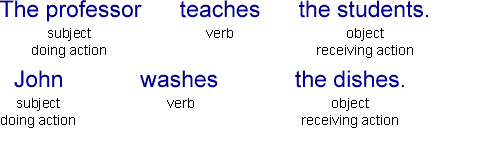
In active sentences, the thing doing the action is the subject of the sentence and the thing receiving the action is the object. Most sentences are active.
[Thing doing action] + [verb] + [thing receiving action]
Examples:
Passive Form
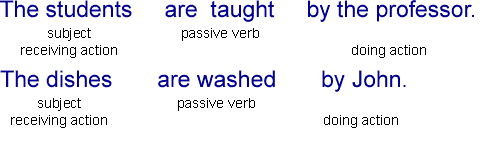
In passive sentences, the thing receiving the action is the subject of the sentence and the thing doing the action is optionally included near the end of the sentence. You can use the passive form if you think that the thing receiving the action is more important or should be emphasized. You can also use the passive form if you do not know who is doing the action or if you do not want to mention who is doing the action.
When rewriting active sentences in passive voice, note the following:
- the object of the active sentence becomes the subject of the passive sentence
- the finite form of the verb is changed (to be + past participle)
- the subject of the active sentence becomes the object of the passive sentence (or is dropped)
[Thing receiving action] + [be] + [past participle of verb] + [by] + [thing doing action]
Examples:
Active / Passive Overview
| Active | Passive | |
| Simple Present | Once a week, Tom cleans the house. | Once a week, the house is cleaned by Tom. |
| Present Continuous | Right now, Sarah is writing the letter. | Right now, the letter is being written by Sarah. |
| Simple Past | Sam repaired the car. | The car was repaired by Sam. |
| Past Continuous | The salesman was helping the customer when the thief came into the store. | The customer was being helped by the salesman when the thief came into the store. |
Exercises
Spain: PREHISTORY AND ANCIENT CULTURES
Visita de Dña. Esperanza Aguirre, presidenta de la Comunidad de Madrid
WELCOME BACK TO SCHOOL!!
Summer is over and a new school year starts!!
Welcome back!!
The Chronicles of Virgen de Navalazarza 2011-2012
SUMMER WORK
Nuestro curso ya ha llegado a su fin. Ahora todos tenemos unos cuantos días para descansar y asentar los conocimientos adquiridos durante estos 9 meses.
En general todos habéis trabajado muy bien, aunque alguno se ha relajado los últimos meses y necesita hacer algún trabajito de refresco del curso. Vuestros profesores ya os han recomendado trabajos para hacer este verano (además de descansar y disfrutar de vuestras familias y amigos), pero queremos recordamos los cuadernillos que consideramos más adecuados para estos días de asueto:
- VACACIONES Santillana - Repaso 5º ISBN: 84-294-8208-3
- Santillana Cuadernos - Números y Operaciones 12 ISBN: 978-84-680-1301-5
Para repasar el inglés, deberíais acabar el cuadernillo de KET (hasta la página 25) y descargaros e imprimir una selección de fichas de inglés para seguir prácticando vuestras habilidades como escritores en el siguiente link.
A los que os guste trabajar en cuadernillos, también os podemos recomendar
Reading and Writing 5 - Oxford ISBN 978-0-19-467407-2
Y, por favor, no olvidéis repasar la geografía española (comunidades autónomas, provincias, capitales y principales ríos y cadenas montañosas).
and don’t forget to HAVE A FANTASTIC SUMMER HOLIDAY!!!!

SUMMER TIME!!
GEOGRAFÍA
A través de estos mapas interactivos os ofrecemos una amplia gama de recursos educativos para poder conocer la geografía española a todos los niveles de una manera amena.
Pinchad en la imagen para acceder a los juegos.
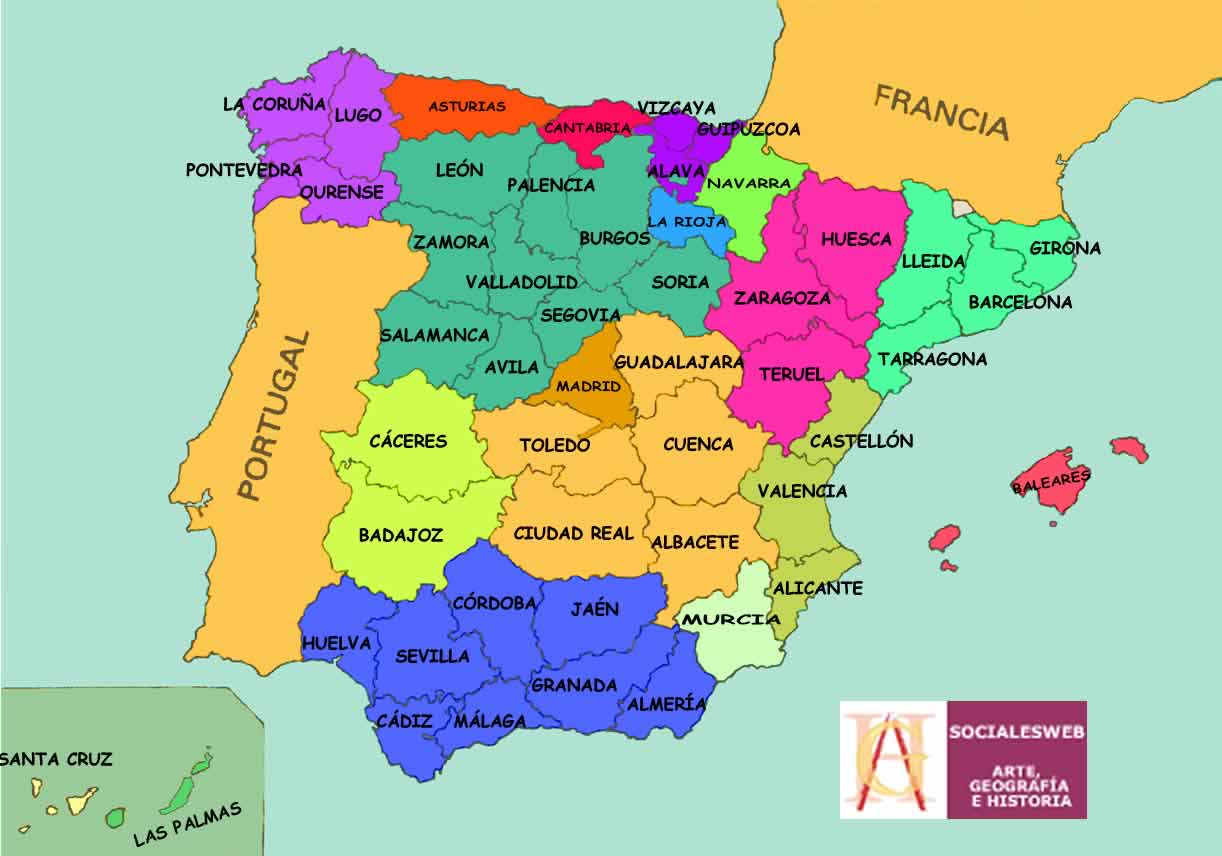
Esperamos que os guste.
3ª edición TALENT SHOW
Los que el lunes tarde compartísteis con nosotros esos momentos tan especiales del TALENT SHOW ya sabéis que fue todo un éxito.
Para los que no pudísteis estar allí, os diré que todos y cada uno de los participantes mostraron ser de lo más talentosos.
Todos ellos nos fascinaron y cautivaron con su saber hacer, con sus encantos y su puesta en escena.
¡¡¡Gracias!!!
¡¡Gracias a todos, participantes, ayudantes, colaboradores y padres!!
Does the bird eat the Gingerbread Man??
So...does the bird eat the Gingerbread Man?
Wait and see...the decision will be in your hands.
Expect the unexpected after the summer holiday!
MORE ABOUT SIMPLE MACHINES

SIMPLE MACHINES
Fancy playing a game on SIMPLE MACHINES while learning a bit more about them?
Click on the picture to start.