Blogia
Our 6th grade Blog

SOCIAL AND NATURAL SCIENCE

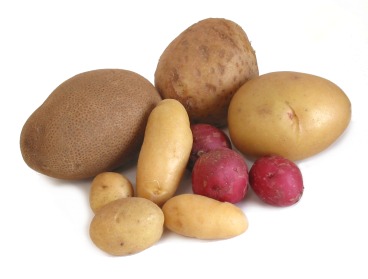
10 facts about potatoes!!!

Did you know...???

  • Potatoes were first eaten more than 6,000 years ago by indigenous people living in the Andes mountains of Peru.
  • The Incas measured time by how long it took for potatoes to cook.
  • Religious leaders denounced the potato because it wasn’t mentioned in the Bible.
  • Potatoes are the world’s fourth food staple - after wheat, corn and rice.
  • Potatoes are grown in more than 125 countries (even in space - in 1995).
  • Every year enough potatoes are grown worldwide to cover a four-lane motorway circling the world six times.
  • China is the world’s largest potatoe producer.
  • Namibians each eat an average of 110 kilograms of potatoes every year - not quite as much as the Germans consume.
  • In 1778 Prussia and Austria fought the Potatoe War in which each side tried to starve the other by consuming their potatoe crop.
  • During the Alaskan Klondike gold rush of the 1890’s, potatoes were so valued for their vitamin C content that miners traded them for gold.


EUROPEAN UNION - Questions

  1. What is the EU?
  2. When was it created?
  3. What is the main goal of the EU?
  4. When was the European Economic Community created?
  5. Which six countries founded the European Economic Community (EEC) in 1957?
  6. What treaty did the member states of the EEC sign in 1992?
  7. How many member states has the EU got at the moment?
  8. Why has the EU flag got twelve stars?
  9. Which European institution prepares new laws?
  10. When did Spain join the European Economic Community?
  11. Who can participate in the Erasmus programme?
  12. What is the European climate like?
  13. Why are Europeans living longer lives?
  14. What values is European society based on?
  15. Why do people immigrate to the EU?
  16. Which sector of the European economy employs the most people?
  17. Which sector employs the fewest people?
  18. Which country has got the highest percentage of electricity produce from renewable sources of energy?
  19. Which country has got the lowest percentage?
  20. What position does Spain occupy in this list?


EUROPA POLÍTICA

Repasa y estudia la geografía política de Europa a través de estos divertidos juegos interactivos. 


SPAIN'S POPULATION - Questions

  1. What is the total population of an area?
  2. What is the real population change? Explain your answer.
  3. How do we calculate the population density?
  4. What type of information do municipal registries keep?
  5. How often is there a national census in Spain?
  6. Why has Spain got a low birth rate?
  7. Why is Spain’s net migration positive?
  8. What is the population density like in large cities?
  9. What is the surface area of Spain?
  10. What is the population density like in Extremadura?
  11. What is the population density like in Madrid?
  12. Which autonomous community has got a bigger population?
  13. Which has got a higher population density?
  14. Where does the rural population live?
  15. Why are there more females than males in Spain?
  16. What percentage of Spaniards live in towns and cities?
  17. Which population group do people over the age of seventy-five belong to?
  18. What is a population pyramid?
  19. When did many Spaniards immigrate to the Americas?
  20. Which group makes up about 13% of the Spanish population?
  21. What should we do when new immigrants arrive in Spain?
  22. How did Spain’s migration patterns change at the end of the 20th century?


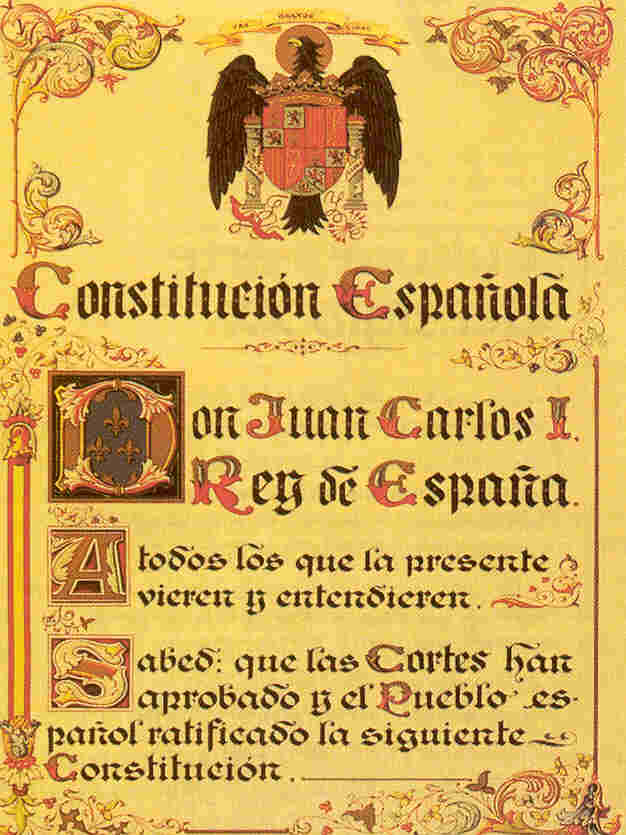
LA CONSTITUCIÓN ESPAÑOLA

Curious facts about our national symbols

THE COLOURS OF THE FLAG

• In the times of King Carlos III, the Spanish flag was white, with a Picture of the royal coat of arms in the centre. White was the colour of the Bourbon royal dynasty. In other countries where the Bourbons ruled, such as France and Italy, the national flags were also white.
• In those times, warships and trading ships used flags to show their nationality, but many countries had flags with the same colours. It was difficult to see the differences at a distance or when it wasn’t windy. When people saw a strange ship, they didn’t know its nationality until the ship was very close, and that could be dangerous during a war!
• King Carlos III decided to change his country’s flag. He organised a competition and people created 12 different designs. The king finally chose a red and yellow design because it was easy to see on ships from a distance. That is why red and yellow are the colours of Spain’s flag today.


THE ANTHEM

• The Spanish national anthem was originally a military march, a grenadier (an elite military corps from the 18th century) march to be precise. In 1770, King Carlos III proclaimed it the anthem of the Spanish Crown. It has been our national anthem since then.


SPAIN'S POLITICAL SYSTEM - Questions

  1. What is the Constitution?
  2. When was the Spanish Constitution approved?
  3. What does the word “democracy” mean?
  4. What are elections for? How often are they held?
  5. How old do you have to be to vote in Spain?
  6. Who is the head of state in Spain?
  7. Which Spanish institution monitors the government’s activities?
  8. How many Members of Parliament are there in the Spanish Congress?
  9. Who chooses the ministers of the Spanish government?
  10. What type of power have magistrates got?
  11. Which power passes new laws and makes changes to old laws?
  12. How many autonomous communities are there in Spain?
  13. What are Ceuta and Melilla? Where are they?
  14. What official symbols have all autonomous communities got?
  15. Which two autonomous communities are not part of the Iberian Peninsula?
  16. Which seas does the Iberian Peninsula border on?
  17. What organisation passed the Universal Declaration of Human Rights?
  18. Which human rights are included in the Spanish Constitution of 1978?
  19. Which Spanish citizens must obey the law?
  20. Who has got the right to clean water?


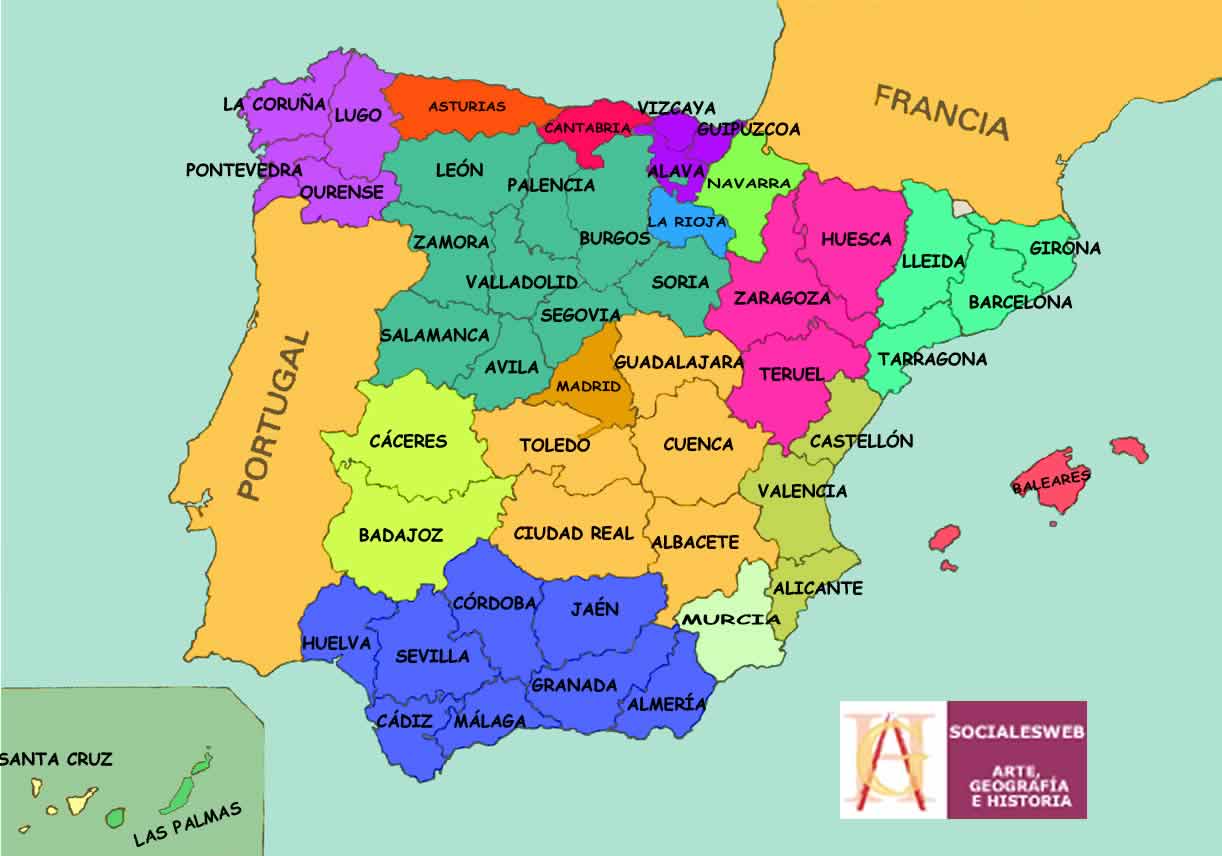
SPANISH GEOGRAPHY

Locate on the map each of the provinces of Spain.

Click on the image to start the game.

CONTEMPORARY SPAIN - Questions

  1. Who was the king of Spain on 2nd May 1808?
  2. Where was the Constitution of 1812 signed?
  3. Who became king after the War of Independence?
  4. Who was the first constitutional monarch? When did she rule? Which political group wanted her to have more power?
  5. When did the First Republic start? When did it finished?
  6. Who became king after the First Republic?
  7. When did Primo de Rivera establish a dictatorship?
  8. When did Alfonso XIII leave Spain?
  9. When did the Second Republic start? When did it finished?
  10. What happened in Spain during the Second Republic?
  11. When did the Spanish Civil War start? When did it end? Who won the war? What happened as a result?
  12. Who did the nationalists support during the Civil War?
  13. Who was General Franco? What form of government did he establish in Spain?
  14. When did Franco die?
  15. Who was Spain’s first president after Franco died?
  16. Who tried to lead a military coup in 1981?
  17. Which political party won the elections in 1982?
  18. Which political party was in power in 1998?
  19. What style of buildings did the architect Antonio Gaudí design?
  20. What type of artist were Chillida and Gargallo?
  21. What style of painting was Salvador Dalí famous for using?
  22. Look for the definitions of the following concepts in a dictionary: military coup, republic, monarchy, dictatorship, democracy and strike.

The Spanish Civil War


  • The Spanish Civil War started in the year 1936.
  • General Francisco Franco led a military coup against the government of the Second Republic.
  • Spaniards were divided into two groups: the republicans and the nationalist.
  • The war ended in the year 1939. The nationalists won the war.
  • General Francisco Franco established a dictatorship.


The War of Independence (1808-1814)


  • The Revolt of Aranjuez (1808) was a revolt against Carlos IV led by his own son Fernando VII, an unprecedented event in the history of Spain.
  • As a result of the uprising, Carlos IV abdicated the throne in favour of his son Fernando VII.
  • After this confusing situation, Napoleon managed to get Carlos IV and Fernando VII to Bayonne and to give up the throne to José Bonaparte, his brother.
  • Meanwhile Fernando VII remained in prison. When he returned to Spain in 1814, he was received with great jubilation by the entire nation, who named him Fernando the Desired.

THE CONTEMPORARY AGE

QUESTIONS:

  1. What year did the French Revolution begin?
  2. What were the causes of the French Revolution?
  3. What were the consequences of the French Revolution?
  4. When did the Industrial Revolution begin?
  5. What social group did factory workers belong to?
  6. What does imperialism mean?
  7. Which two countries had the most colonies in the 19th century?
  8. What did countries that were imperial powers want from their colonies?
  9. When was the First World War?
  10. What year did the Second World War end?
  11. Which two countries became superpowers after the Second World War?
  12. Why was the United Nations (UN) established? When was it established?
  13. What does “Cold War” mean?
  14. Which two cities were destroyed by atomic bombs?
  15. What is one negative effect of globalisation?
  16. How is transport today different from transport in the 19th century?
  17. Why are there lots of schools in Spain now?
  18. Why should all people be equal before the law?
  19. What does the legislative power do?
  20. What does the executive power do?
  21. What does the judicial power do?
  22.  When were the three separated powers established?


WWI and WWII

Countries were involved in World War I

Central Powers:

  • Germany
  • Austria-Hungary
  • Ottoman Empire
  • Bulgaria

Allies and associated powers:

  • Serbia
  • Russia
  • France
  • Britain
  • Belgium
  • Romania
  • US (entered in 1917 only after a German u-boat sunk a boat full of civilians) 
  • The British Commonwealth countries: Australia, New Zealand, South Africa, India, etc. Canada was part of this group but was almost instantly looked upon as a rising superpower for it’s soldiers bravery and tactics, the Germans started calling them the "storm troopers" after they took Vimy Ridge (a vantage point previously thought impossible to take after numerous tries by the British and french) 
  • Italy


Countries were involved in World War II

Allies Vs Axis Powers:

World War 2 involved most of the world’s nations which fought for either of two military alliances - the Axis Powers and the Allies. 
The key members of the Allies of World War 1 - France, Britain, Russia and the United States once again fought against Germany but they also had to fight against their former allies of Italy and Japan which joined the Nazi Germany. Just like World War 1, World War 2 started in Europe with the German invasion of Poland on September 1, 1939, which is traditionally viewed as the beginning of war. 

Countries that Joined the Allies:

Most of the countries of world joined the Allies although some of them were controlled by pro-Axis regimes. The original anti-German military alliance consisting of Poland, France and Britain was eventually joined by the following countries (by alphabetical order):

  • Aden Protectorate (former South Yemen)
  • Albania
  • Argentina
  • Australia
  • Belgium
  • Bolivia
  • Brazil
  • British Malaya (today’s Malaysia and Singapore)
  • British Raj (today’s India, Bangladesh, Burma and Pakistan)
  • Canada
  • Chile
  • China
  • Colombia
  • Costa Rica
  • Cuba
  • Cyprus
  • Czechoslovakia
  • Denmark
  • Dominican Republic
  • Dutch East Indies (present-day Indonesia and New Guinea)
  • Ecuador
  • El Salvador
  • French Indochina (today’s Cambodia, Laos and Vietnam)
  • French Guiana
  • Greece
  • Guatemala
  • Guyana
  • Haiti
  • Honduras
  • Iran
  • Iraq
  • Luxembourg
  • Malta
  • Mexico
  • Mongolia
  • The Netherlands
  • Newfoundland
  • New Zealand
  • Nicaragua
  • Norway
  • Palestine
  • Panama
  • Peru
  • Philippines
  • Saudi Arabia
  • Soviet Union
  • Syria
  • Trucial States (today’s United Arab Emirates)
  • Turkey
  • The United States
  • Uruguay
  • Venezuela
  • Yugoslavia

The Allied coalition also included all African countries except for Italian colonies of Somalia, Ethiopia and Italian North Africa (present-day Libya), and Spanish and Portuguese colonies of Mozambique, Angola, Spanish Sahara (present-day Western Sahara) and Portuguese Guinea (today’s Guinea-Bissau) which were neutral like their colonial rulers. Countries such as Italy which later left the Axis powers and joined the Allies are not considered Allied states. 

States that Allied Themselves with the Axis Powers:

The Axis powers were officially founded by the Tripartite Pact signed between the Nazi Germany, Italy and Japan on September 27, 1940. Countries that allied themselves with the Axis powers include:

  • Bulgaria
  • Finland
  • Hungary
  • Romania
  • Vichy France
  • Thailand
  • Formosa (present-day Taiwan)
  • Manchuria


The Axis powers created a number of puppet states in occupied areas but they usually are not considered Axis states although some of them actively collaborated with the Axis such as the newly established Independent State of Croatia and the Slovak Republic. However, both of them ceased to exist after the end of World War 2 and were rejoined with Czechoslovakia and Yugoslavia, respectively, both of which were Allied states. 

Neutral Countries:

Few countries remained neutral during the entire World War 2:

  • Switzerland
  • Sweden
  • Spain
  • Portugal
  • Iceland
  • Ireland
  • Afghanistan
  • North Yemen
  • Oman
  • Nepal
  • Tibet and the above mentioned Spanish and Portuguese colonies in Africa.

2º cuadernillo de preguntas de cultura general CDI

Writing Task 5

Friday, 26th October 2012

Factual writing 

Write an article for a music magazine about a popular band. Say how long they have been famous, explain why a lot of people like them and give your opinion of their songs.


Causes of French Revolution

Wars:

A number of major wars had taken place in the forty years leading up to the revolution. France used to always participate in the war and King Louis had to invest a lot of money in wars and the weapons. All this money came from the taxes paid by the 3rd estate. For example: the war with British: in 1756 the French fought with the Americans against British. This caused the government run low on money at a time when prices were high. This contributed to the overall causes leading up to the revolution because it outraged the peasants to be so burdened that they could not afford to eat. On top of that they had failed crops which further increased the price of the essential commodities. All this lead to unrest and food riots.

Price increase:
In 1700, the price of essential things increased so much that the wages of the workers could not match with the price of the commodities. So the families could not afford food and other basic necessities with such low incomes. This is long term causes which lead to French revolution as there was a lot of discontentment among the masses.

Poor Harvest:
In 1787-88, the harvests were very bad due to very severe cold winters. Thousands of people suffered because there was not enough food. Angry mobs gathered in the streets. The women played an important role in the French revolution as these poor women of Paris marched to the king’s palace at Versailles to demand bread for their hungry children. This is one of the short term economical causes of revolution.


Burden of New Taxes:
In order to create funds for the war and to buy the weapons, the King Louis XVI kept on increasing the taxes which further added burden on the third estate as discussed in the other section. This lead to French revolution as the poor peasants could not cope up with theses taxes and could not do anything about it as they had no voice. They wanted to have a say in as to how the country should be run.

The First Estate:
the first estate mainly consisted of clergy. This was the Roman Catholic Church. They were the 0.3% of France’s population and owned about 10% of the land. On top of that, they didn’t pay taxes even thought they were one of the wealthiest people of France. The peasants paid 10% of their salary only to the Archbishops, Bishops and Abbots. The leaders of the clergy, bishops lived like nobles. The first estate contributed to the revolution but it was a short term cause. The Clergy took advantage of the fact that the king was so indecisive and non-judgmental. They thought that they could gain power by helping and advising the king when he would reach a dilemma. The greed for power contributed to the revolution because then the other estates wanted power as well.

The Second Estate:
The second estates were aristocrats. They made up 1.5% of the population and owned 20% of the land. They didn’t pay taxes either. They often ordered peasants to work on their land and made them pay to use the mills. They were given control over other villages. They were hated by both the estates. They were hated by the first estate because the aristocrats had control over more land. They were well of and wealthy and on top of that they didn’t have to pay any taxes. Aristocrats were hated by the peasants because they used to be used as slaves. The second estate contributed to the revolution because they refused to help King Louis by not paying the taxes especially during 1787 when the money was needed to fund the war against the British. The second estate did not help King Louis XVI to bring about reforms in the taxation system. In 1783, Charles de Calonne (Controller General of Finance) suggested that the nobility should also pay the taxes. The nobility refused to cooperate which further increased the economic problems of France.

Unfair taxation and the Third Estate:
The 3rd estate made up 98.2% of the population. The 3rd estate consisted of middle class and peasants. There were lawyers, doctors, bankers, soldiers, merchants, priests, artisans, urban workers and peasants. The majority of the third estates were the peasants. They owned little land. They used to be abused by the first and the second estates. They used to call the poorest members of the third estate sans-culottes. It was a term created by the French in 1790 to describe the poorest members of the thirst estate because they wore pantaloons instead of the more in fashion clothes. The taxation system prevalent in France was faulty as the poorest were forced to pay the maximum taxes. The 3rd estate comprising of mainly the peasants had to pay 1/10 of their salary to the church. This was known as “tithe’. There were many other taxes that they also had to pay. They paid the “taille” which was a sort of income tax. They had to pay “Seigneurial’ to the local landlord, or lord of the manor. These taxes were known as “feudal dues”. For example; the landlord would charge peasants heavily to use his mill to grind corn. Corvée (work tax) was paid for few days each year. Peasants had to work hard for the upkeep of local roads. Gabelle was a tax on salt. There was tax on salt since it helped to preserve food and “Aide” was a tax on bottle of wine. The third estate weren’t paid sufficiently and they had to pay so many different taxes. The revolution took place because there was unfair taxation. The poorest community of France was paying high taxes for multiple reasons. They paid taxes so that the aristocrats can live a lavish life. They paid taxes to fund the war. They paid taxes to save the economy of the country.They are the real heroes of the French revolution because they were the ones who took the first action which was known as the beginning of the French revolution. Because the peasants wanted new constitution, the trigger took place. They wanted power that’s why they took over the king and gained power.

Population increase:
Population increase lead to the French revolution although it was a short term cause. The population increased dramatically in the 18th century. This caused peasants to become landless . This also meant that there was shortage of resources as they didn’t have surplus due to the poor harvest. Due to this reason the capable families worked really hard in order to feed their families and be capable of paying the taxes. This caused the revolution because it made the peasants want more land, money and power.

The age of Enlightment:
The enlightment was a period of revolution; a time where there was a major shift in the way the people thought. People began to question, investigate, reason and find the logic behind the theories. They were confident as they were going against the church / questioning the church, and who ever did that was executed. The enlightment affected areas like POLITICS, ARTS, LITERATURE, SCIENCE and last but not the least RELIGION. People started having secular thoughts. People started becoming open-minded and were ready to accept the change. They made their own laws and customs and adapted reality. Due to this the people became more knowledgeable New political ideas were evolved which lead to a new view of a government. The government system changed. People wanted to have representatives government not one person ruling the country. They wanted to change their form of government form absolute monarchy to democracy. All the citizens wanted to share power. More universities and book were made. This also gave people a better sense of equality. There was a desire to change the society. The philosophers often gathered in Paris and other European cities. They discussed politics, science and society. They changed their ideology. They believed in secular thoughts, “SOCIAL CONTACT “and the “GENERAL WILL”. Social contact was a deal with people for the good, the right to elect, impeaching a president (anyone who has power) and general will was that people should have a right to choose their ruler. These ideas and thoughts lead to the French revolution as the people of France became more aware of their rights and freedom and liberty.

Demands and The tennis court oath:
This was the trigger and led to the revolution. Louis XVI tried to prevent the national assembly from writing a new constitution by locking them out of their meeting rooms. However, they gathered in an indoor tennis court. There they took an oath not to disband until they had written the constitution. This was a major event which started the revolution because we can see that the people have gone against the king because he didn’t let the people make laws and regulations. This also indicates that the citizens desired change badly that is why they took this action and took the oath that they will make a new constitution. The third estate declared themselves as the national assembly. There were three main demands of the peasants. The first one was that the peasants wanted Necker to return and become the finance minister as they knew that he would sort out the monetary issues. Secondly, they wanted new constitution, rules that would give the king less power and give the third estate a voice in the running of France. Their last demand was that they wanted to rule the country as they made the majority of the population.

In conclusion, we can say that there were numerous causes which lead to the French Revolution out of which, most of them were economical. The revolution was imminent because the third estates were treated badly since they were abused, treated like slaves and paid heavy taxes when they couldn’t afford it. They didn’t have power either. The French revolution brought a sense of equality among the citizens of France and everybody shared power. All the causes of the French revolution are interconnected because one issue leads to a anther and piles up. And when all the causes pile up it becomes a burden and there is no way out, hence the majority wins and there is a new beginning. Like in this case, all the causes just piled up. When king Louis had no way out the wheel turned causing the majority to win, in this case the peasants and there was a new beginning. There was a new form of government, sense of equality and everybody had equal power. The political factors lead to the economical factors.

 

1er cuadernillo de preguntas de cultura general CDI

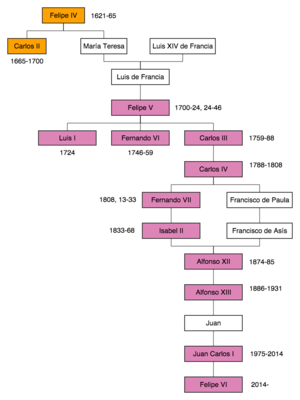
The BORBON DINASTY in Spain

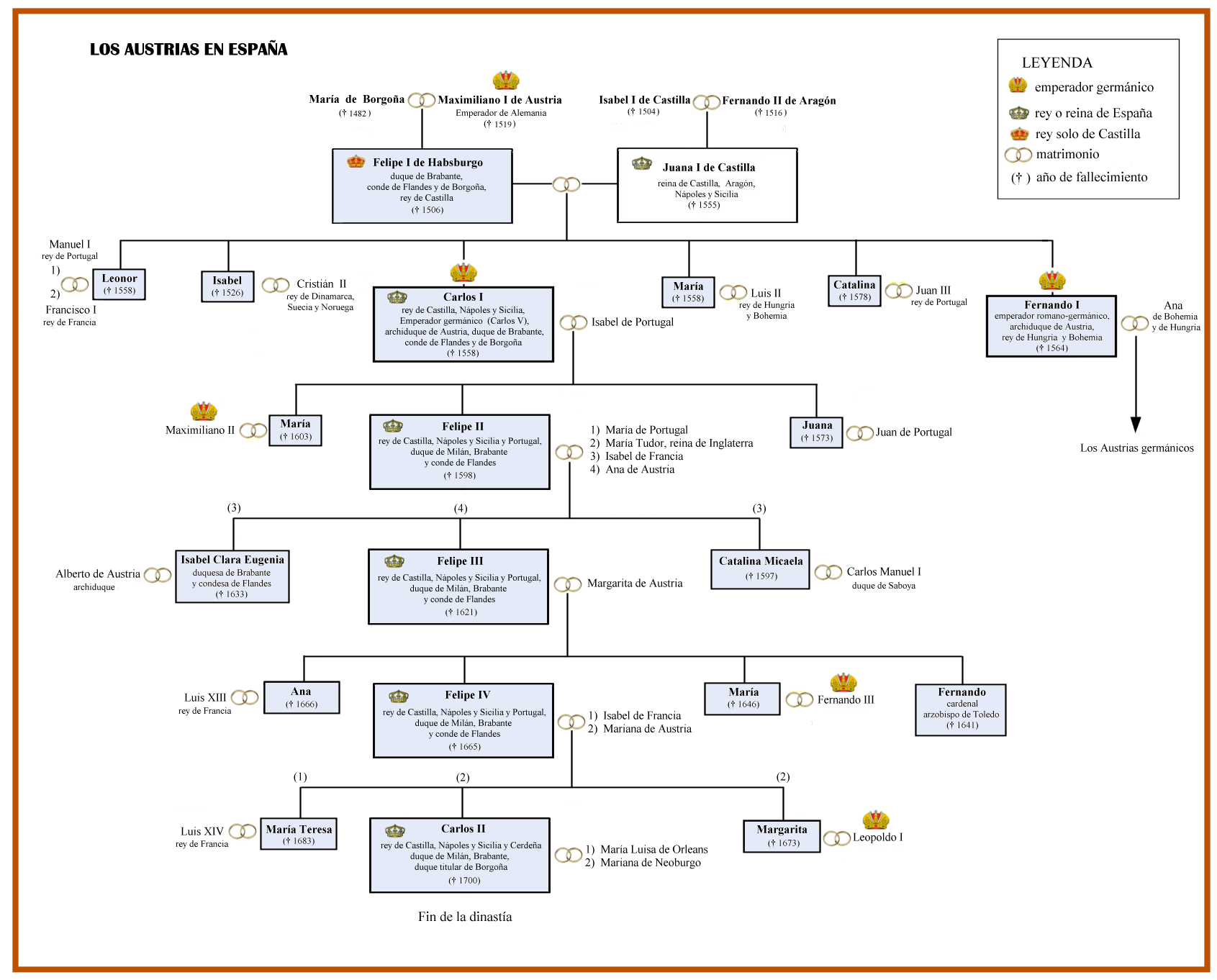
The HABSBURG DINASTY in Spain