Blogia
Our 6th grade Blog

SOCIAL AND NATURAL SCIENCE

PITCH DROP EXPERIMENT


The pitch drop experiment is a long-term experiment which measures the flow of a piece of pitch over many years. Pitch is the name for any of a number of highly viscous liquids which appear solid, most commonly bitumen. At room temperature, tar pitch flows at a very slow rate, taking several years to form a single drop.

The most famous version of the experiment was started in 1927 by Professor Thomas Parnell of the University of Queensland in Brisbane, Australia, to demonstrate to students that some substances that appear to be solid are in fact very-high-viscosity fluids. Parnell poured a heated sample of pitch into a sealed funnel and allowed it to settle for three years. In 1930, the seal at the neck of the funnel was cut, allowing the pitch to start flowing. Large droplets form and fall over the period of about a decade.

The eighth drop fell on 28 November 2000, allowing experimenters to calculate that the pitch has a viscosity approximately 230 billion (2.3×10¹¹) times that of water. 

The ninth drop is expected to fall in 2013!!

Timeline

DateEventDuration

(months)

Duration

(years)

1927     Experiment set up  
1930     The stem was cut  
December 1938     1st drop fell96–1078.0–8.9
February 1947     2nd drop fell998.3
April 1954     3rd drop fell867.2
May 1962     4th drop fell978.1
August 1970     5th drop fell998.3
April 1979     6th drop fell1048.7
July 1988     7th drop fell1119.3
28 November 2000     8th drop fell14812.3

KINETIC AND POTENCIAL ENERGY

HUMAN REPRODUCTION - Questions


  1. What are the primary sex characteristics?
  2. What are the secondary sex characteristics?
  3. When do secondary sex characteristics start appearing?
  4. When do boys usually go through puberty?
  5. What happens to a girl’s hips during puberty?
  6. What parts of a woman’s body produce egg cells?
  7. What is the menstrual cycle? Explain it.
  8. How long is a woman’s menstrual cycle?
  9. What are the external sex organs of the female reproductive system?
  10. What are the internal organs of the female reproductive system? Where are they located?
  11. What are the female gametes called?
  12. What is the muscular canal between the vulva and the uterus called?
  13. What parts of the male reproductive system are external?
  14. Which parts of the man’s body produce sperm cells?
  15. What is the bag of skin around the testicles called?
  16. What do the seminal vesicles produce?
  17. What protects the glans at the end of the penis?
  18. How does fertilisation occur?
  19. When does the embryo join itself to the wall of the uterus?
  20. What does the afterbirth include?

Conception to Birth - Development of Fetus

Play and check your knowledge about the HUMAN BODY

Once Upon a Time... LIFE - THE BRAIN

THE BRAIN and THE NERVOUS SYSTEM

NERVOUS SYSTEM - I’M SENSING SOMETHING

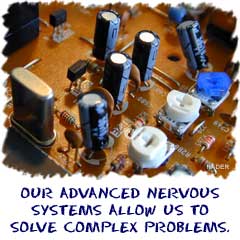
Our advanced nervous system allows us to solve complex problems.Since you’re reading this page, we figure you’ve got a nervous system. If you were an insect you would also have a nervous system, but it would be a lot simpler. Even animals that don’t think have simple nervous systems called nerve nets that help them move. 

Your nervous system is divided into two parts. Your central nervous system includes your brain and your spinal cord. Your peripheral nervous system is made up of the network of neurons that spans your organs, muscles, and body. The neurons in both systems work together to help you think, survive, and change the world around you. 

WHAT DOES THIS SYSTEM DO?

The nervous system is about action and senses. Animals are able to sense what is going on in their surroundings and do something in reaction to that input. If you see a bike that might hit you, you jump out of the way. In that example, your nervous system was involved in many ways. Your eyes saw the bike, your brain figured out the bike might hit you, and your brain told your muscles to make your legs jump out of the way. You sensed and then acted. 

The nervous system controls the senses, movement, and bloodflow in your body.The nervous system also senses activity inside of your body. Most of the nervous system response inside of your body is not in your control. Your body automatically senses and reacts to stimulus. Think about eating your lunch. As you eat, your nervous system triggers the start of digestion and release of many hormones and enzymes throughout your body. 

INTERACTING WITH OTHER SYSTEMS

Your nervous system interacts with every other system in your body. In the same way that all of your cells need oxygen transported by the circulatory system, all of your tissues and organs require instruction and direction from the nervous system. There is obvious interaction between your muscles and your nervous system. That interaction helps you move around and interact with your environment. 

There are many hidden interactions going on within your body. Your endocrine system works closely with your brain and central nervous system to control the creation of specific hormones and enzymes. Your digestive and excretory systems work with the nervous system in both conscious and unconscious ways. While digestion goes on without your thoughts, eating, peeing, and pooping are under your control. 

PARTS OF THE SYSTEM

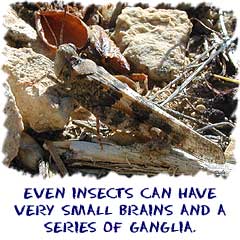
Even insects can have a small brain and a system of ganglia.The nervous system is made up of nervous tissues that are, in turn, made up of many types of neurons. There are billions of neurons connected throughout your body. These neurons are connected end to end and transmit electrical impulses from one point to another. 

Your peripheral nervous system has two types of neurons that are constantly at work. Neurons that send impulses from the central nervous system to your limbs and organs are called efferent neurons. Neurons that receive sensory information and transmit to the central nervous system are called afferent neurons. Therefore, as the stimulus is received, the afferent neurons work and as reaction is needed, the efferent neurons go to work. Afferent=ReceiveEfferent=Act. The words are really close to each other, that’s why repeated the idea.

HOW THE BODY WORKS


Click on the image and then, once in the website, click on a body part to watch MOVIES, take QUIZZES, read ARTICLES, solve WORDFINDS, and do ACTIVITIES... about the PARTS OF YOUR BODY.

A different way of learning!!


Did you realise?

Bones aren’t completely solid, there are spaces between the hard parts. The hard parts are made out of bone tissue. This tissue contains cells and minerals, such as calcium and phosphorus, which are responsible for the bones’s hardness.

In some of the small spaces, there are nerves and blood vessels that provide the cells with nutrients; in other spaces, there’s tissue called bone marrow. Bone marrow can be red or yellow. Red bone marrow is a tissue that produces blood cells. Yellow bone marrow is a fatty tissue that acts as an energy store.


MUSCLES and BONES - Questions

  1. What type of skeleton have humans got?
  2. Which organs of the body does the skeleton protect?
  3. What are muscles made of?
  4. What does bone marrow produce?
  5. How many bones are there in the human body?
  6. How many bones are there in the feet?
  7. How many bones are there in the hands?
  8. What do the bones of the head do?
  9. Which bones connect each upper extremity to the trunk?
  10. Where are your metacarpals located?
  11. What shape are the muscles in your legs?
  12. What type of muscles can you control?
  13. What do the orbicular eye muscles do?
  14. Which muscle bends the leg at the knee?
  15. What type of joint can’t move?
  16. What type of joint is in your shoulder?
  17. What stops the bones in your joints from touching?
  18. What vitamins help you build strong bones?

Once upon a time... LIFE - MUSCLES and BONES

THE LOCOMOTOR SYSTEM

  • SKELETONS INSIDE AND OUT

Skeletal systems come in many forms. You have a skeleton inside of your body (endoskeleton) made up of bones. Insects and crustaceans have skeletal systems on the outside or their bodies (exoskeletons) that are made of hard plates. 

Skeletons hold up the structureOrganisms like starfish do not have bones or plates. They have skeletons made up of fluids inside of tubes within their bodies. The fluid skeletal systems are called hydrostatic. All animals that live outside of the water need some kind of skeletal system to support or protect them. 

WHAT DOES THIS SYSTEM DO?

We already hinted at the purpose of a skeletal system. Protection and support are the two big reasons that organisms have skeletal systems. In your body, the skeleton works very closely with the muscular system to help you move. Without the bones of your skeleton, you would be a blob of water-filled tissues. The bones create a framework to which your muscles and organs can connect. Your skeleton also plays a role in protection, especially in your head. The bones of your skull protect your all-important brain. Your ribs protect most of your internal organs from impact as well. Other animals with exoskeletons receive obvious protection from their skeleton. Crabs and insects have hard shells made of chitin to protect their entire bodies. 
Structure of bone

INTERACTING WITH OTHER SYSTEMS

Your skeletal system does not work alone. We already mentioned the interaction with your muscular system. Muscles connect to your skeleton and they contract and move the skeleton along. Your skeletal system is made up of cartilage and calcified bone that work together. They help the process of movement happen in a smoother manner. The calcified bones of your skeleton also work with the circulatory system. Marrow inside of your bones helps produce the cells inside of you blood. Both red blood cells and white blood cells are created in your bones.

  • MUSCULAR SYSTEM - MEAT ON THE BONES

Many advanced animals have muscular systems. You know you do. Did you know that your muscular system is made up of three different types of muscular tissue? You have smoothcardiac, and voluntary muscle tissue in your body. Smooth muscle is muscle you rarely control such as the muscle in your intestinal tract. Cardiac muscle is very specific tissue found in your heart. Voluntary muscle is the muscle that helps you move. All of those tissues add up to a muscular system that is found through your body. There is more to the muscular system than the muscles that help you move.

WHAT DOES THIS SYSTEM DO?

The big purpose of the muscles found in your body is movement. We could be talking about the movement of your legs while you walk. We could be talking about the beating of your heart. We could also be talking about the contraction of a very small blood vessel in your brain. 

You have no control over most of the muscular system. You do control the voluntary muscle in your arms, legs, neck, and torso. You have little or no control over the heart or smooth muscle. Those other muscles are under the control of the autonomic nervous system (ANS).

INTERACTING WITH OTHER SYSTEMS

We just teased the fact that your muscular system is closely connected to the nervous system. That makes sense since you usually have to think before you can move. Even though thinking is not always involved, the neurons of the nervous system are connected to most of the cells in your muscular system. You have smooth muscles that line your digestive system and help move food through your intestines. Smooth muscle also surrounds your circulatory system and lymph system. Those muscle tissues are spread throughout your body and are even involved in controlling the temperature of your body.

MUSCLES HELP YOU MOVE

The main parts of your voluntary muscular system include the muscles, and tendons. Tendons connect your muscles to your bone at insertion points. 

When the muscle shortens, the bones are pulled closer together. Muscles called flexors force your joints to bend. Muscles called extensors cause your limbs to straighten. A bicep is a flexor and the triceps are extensors. You may have also heard of ligaments. They are batches of connective tissue that bind bones to each other. Muscles, tendons, and ligaments can been found working together in almost all of your joints.

CIRCULATION and EXCRETION- Questions

  1. Why does the body need nutrients and oxygen? How are they carried around our bodies?
  2. What does the body do with the substances it doesn’t need or which are harmful?
  3. What does the circulatory system do?
  4. Which systems are involved in the process of waste elimination?
  5. Explain: pulmonary circulation and general circulation.
  6. What is the difference between oxygenated blood and deoxygenated blood?
  7. What does the blood carry? What does it contains?
  8. How many types of blood cells are there? Name them and say what their functions are.
  9. Where do the blood vessels go?
  10. Which blood vessels carry blood to the right atrium?
  11. What are the capillaries?
  12. How many chambers has the heart got? How are they called?
  13. Which chamber of the heart pumps blood around the body?
  14. What does the septum do?
  15. Where does blood pick up oxygen?
  16. What are the functions of the excretory system? Name the two main parts of the excretory system.
  17. What do sweat glands do? What does sweat contain?
  18. What are the main parts of the urinary tract? And what are their functions?
  19. Explain the process of eliminating waste products and harmful substances through the urinary tract.
  20. Where are the kidneys?
  21. What blood vessels carry blood to the kidneys?

THE CIRCULATORY SYSTEM

THE EXCRETORY SYSTEM

How much do you know about your heart?

Find out by taking this quiz!

If you still need to look for more information about your Heart and the Circulatory System, try here.

DIGESTION and RESPIRATION - Questions

  1. What is a cell? What are the main functions it perform?
  2. What do groups of cell form? Name and explain what the functions of the different tissues?
  3. What do groups of tissues form? Name five of them.
  4. What do groups of organs form? Name a few of them.
  5. What are the basic life processes different organs perform? Classify the systems each basic life process belong to.
  6. Which are the parts of the digestive system? Name them in order.
  7. Where does digestion start? Explain it.
  8. How many parts has the small intestine got?
  9. Which part of the body produces saliva?
  10. Where does the body store bile?
  11. Define: bolus, chyme and chyle.
  12. What are the five most important nutrients for our body. Explain why each one is important.
  13. Which food contains fat? How many portions should we eat a day?
  14. What do pasta and bread contain? How many portions should we eat a day?
  15. Which foods have got lots of proteins in? How many portions should we eat a day?
  16. Which foods have got lots of vitamins in? How many portions should we eat a day?
  17. What does a healthy diet include?
  18. Which are the parts of the respiratory system? Name them in order.
  19. Which are the two actions breathing includes? Name and explain them.
  20. Name and explain the exchange of gases that occurs when breathing.


Build a Digestive System

The digestive systems of humans and bison are adapted to their diet.

Can you reassemble in the proper order the different components of their systems?

Gallery interactives

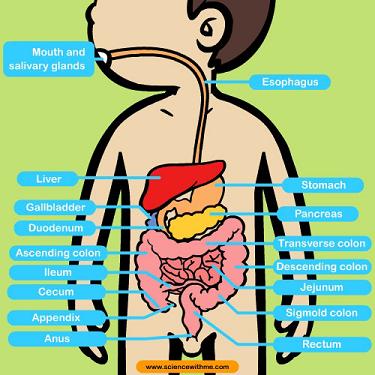
THE DIGESTIVE SYSTEM

THE DIGESTIVE SYSTEM

Do you want to learn more about the digestive system while having fun?

Click on any of the following links to play quiz games:


Digestive Organs Quiz #1

Digestive Organs Quiz #2

Quiz on Nutrition #1

Quiz on Nutrition #2

Interesting Facts about Digestion

Label the Diagram of Digestive System

Vocabulary Game: Digestive System


What is a System?

Complexity of systems compared to cellsA system is a group of organs that work together and provide an organism with an advantage for survival. It is the most complex organization in your body and the final level of the progression from cells to tissues to organs and then systems. Systems work alone and with other systems to allow your body to maintain homeostasis. Homeostasis  is a stable internal environment that allows you (and your cells) to survive. 

While every one of your systems is needed to survive, your nervous system is the most important as you continue reading this page. Your eyes and brain are reading these words and remembering all of the information about systems. If you think about it, you are also using your muscular system to help move your eyes, pupils, and keep your head up. 

Organs Working Together

Organs are a part of every system. Your heart is classified as an organ and it is a part of the circulatory system. Organs can work within several systems of your body. Many organs also have specific cells or tissues that have different functionality. Your kidneys are not only a part of your excretory system; they also have specific parts that serve the endocrine system. 

You, and many advanced mammals, have similar organs and systems. However, there is a wide variety of organ types found throughout the animal kingdom. Some aquatic animals have organs that remove salts from salt water and an animal like a cow might have multiple stomachs in the digestive system. 

Systems Can’t Work Alone

Systems connect to other systemsWe just explained how organs could be a part of several systems. Similarly, systems rarely work alone. All of the systems in an organism are interconnected. A simple example is the connection between the circulatory and respiratory systems. As blood circulates through your body, it eventually needs fresh oxygen (O2) from the air. When the blood reaches the lungs, part of the respiratory system, the blood is re-oxygenated. Your stomach, part of the digestive system, constantly interacts with your endocrine system and spreads hormones throughout your body.