
SOCIAL AND NATURAL SCIENCE
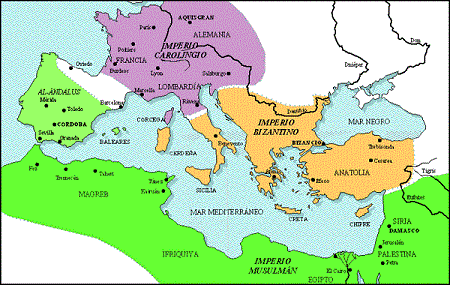
THE MIDDLE AGES (10th century): Carolingian, Byzantine and Islamic Empires
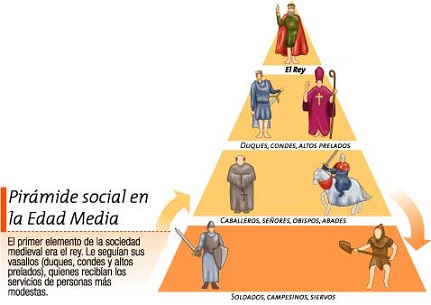
PIRÁMIDE SOCIAL DE LA EDAD MEDIA
1er Cuadernillo de Preguntas de Cultura General
La Edad Media
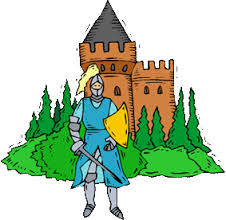
Pincha aquí para aprender más sobre LA EDAD MEDIA.
Ahora pincha en la imagen para jugar a CABALLEROS Y CASTILLOS.
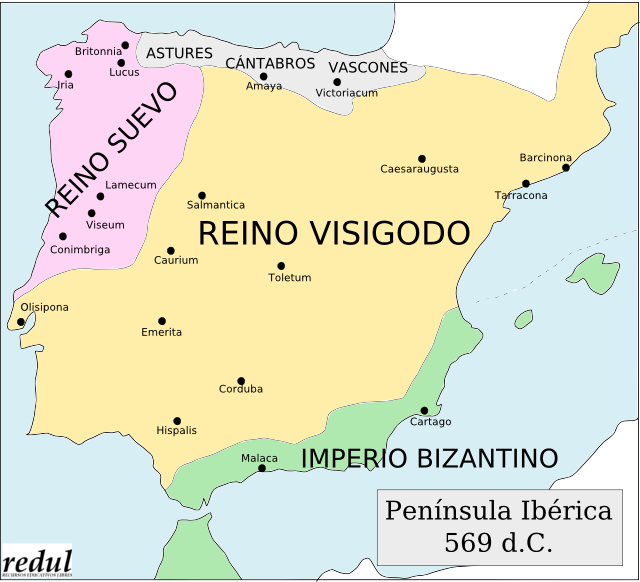
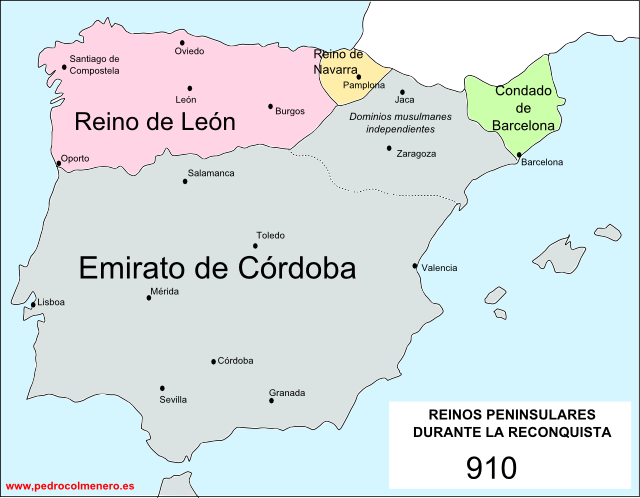
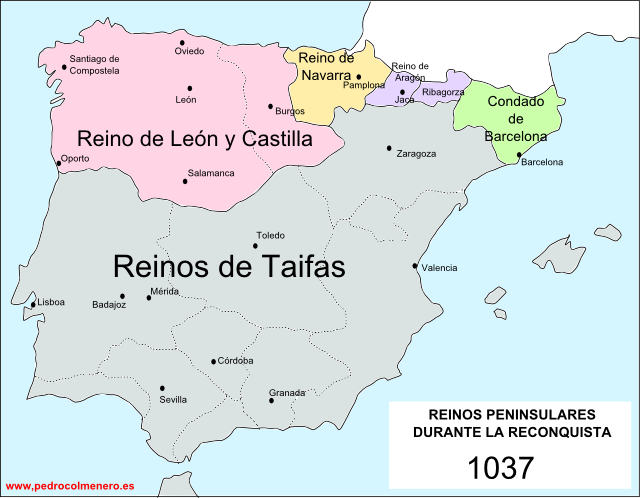
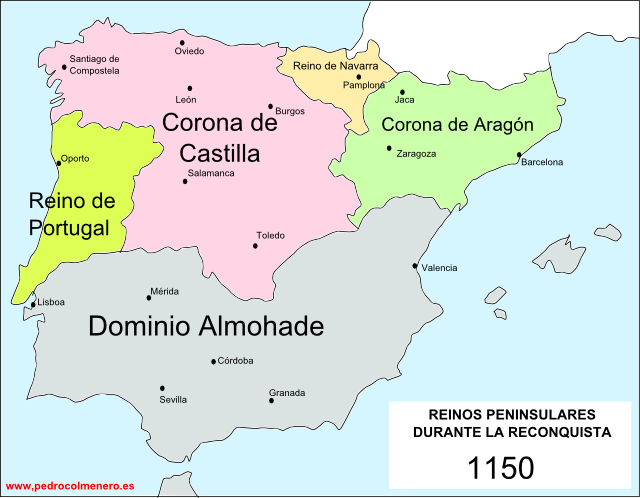
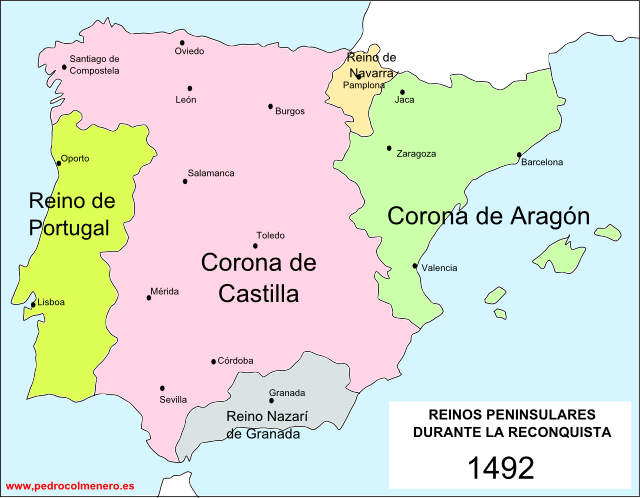
La Peninsula Ibérica durante la Edad Media
LIFE IN THE MIDDLE AGES
FUN FACTS ABOUT THE MIDDLE AGES
1. The Middle Ages refers to a time in European history from 400-1500 AD. It occurred between the fall of the Roman Empire and the discovery of America (beginning of the Renaissance).
2. Historians usually divide the Middle Ages into three smaller periods called the Early Middle Ages, the High Middle Ages, and the Late Middle Ages.
3. During much of the Middle Ages, people in Europe were fighting against the Islamic Empire to take back the Eastern Mediterranean, especially Jerusalem, for the Christian religion. These wars were called the Crusades.
4. The Middle Ages was defined by a Feudal system in much of Europe. This system consisted of kings, lords, knights, vassals and peasants. The people who were part of the church played an important part also. When a person was born into a certain group, they rarely moved to another level.
5. The Feudal system was the law of the land, and the way that the upper class maintained control over the lower class. The upper class provided protection to the lower class and in exchange, the lower class worked for the upper class. The kings and lords lived in castles and were attended to by their personal servants, called vassals. The soldiers that fought for the king and lords were called knights. When conflict arose, the peasants would leave their fields and villages and come into the safety of the castle walls.
6. Kings ruled by what they believed was their "Divine Right". This meant they believed God made them the King, and their kingdom was passed down through generations.
7. Many fairy tales have their roots in the Middle Ages. When you read about castles and the characters that lived and around them, these stories are being told about this time in history.
8. Castles were built for the lords and kings who lived in them. The bigger and stronger the castle was, the wealthier the person who had it built was. The poor lived in huts made from sticks, straw and mud.
9. The church had a great influence over the people. The peasants believed that the harder they worked, the more of their money they gave to the church, and the more they served the church, the better the after-life would be for them.
10. By the early 1300s, however, Europe suffered from both war and disease. The wars were made much worse by the Black Death, or bubonic plague, which spread along the Silk Road from China to Europe starting in 1328, killing millions of people and causing the collapse of the Mongol Empire. By the 1400s, after the plague, Europe looked very different, and the wars were over, and Middle Ages were coming to an end.
MIDDLE AGES
- THE END OF ANCIENT HISTORY
Roman empire became too large and it was divided into 2 parts:
- WESTERN ROMAN EMPIRE (ROME)
EASTERN ROMAN EMPIRE (CONSTANTINOPLE)
Barbarians tribes moved into Roman territory, Rome was invaded in 476 C.E which was the end of the Ancient Period.

- GERMANIC PEOPLES
Many barbarians were Germanic tribes from Central Europe.
Most were farmers, so they lived in the countryside.
They had their culture but learned to speak LATIN, adopted ROMAN LAWS and they converted to CHRISTIANITY.
Society was divided into 3 main groups: KNIGHTS, CLERGY and PEASANTS.
A new social and economic system was developed: FEUDALISM.
- THE VISIGOTHIC KINGDOM OF TOLEDO
- The Visigoths were an important Germanic tribe. They arrived in Roman Hispania in 507 C.E.
- Visigoths established a new kingdom in the Western Roman Empire, with its capital city in Toledo.
- That was the beginning of the Middle Ages in Spain.

Los Celtas
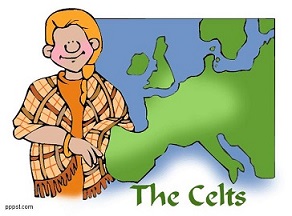
Pincha en el link para aprender más sobre LA CULTURA CELTA.
La Civilización Romana
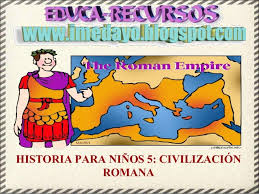
Pincha en el link para aprender más sobre LA CIVILIZACIÓN ROMANA.
La Antigua Grecia
Pincha en el link para ver aprender más sobre la LA ANTIGUA GRECÍA.
Death in Rome
Be a Roman sleuth - use your detective skills to unravel the events behind a mysterious death. You have until dawn to investigate the crime scene, and crack the case.
Piece together the puzzle using their evidence, eye-witness testimonies, and perhaps a little detective’s intuition.
Questions: PREHISTORY and ANCIENT TIMES
- What is history? What are the 4 main objectives of History?
- How do we measure the time in History?
- Write the 5 periods in which we divide History and when they begin and end.
- When did Prehistory begin? When did Prehistory finish?
- Write the periods in which we can divide Prehistory.
- Write 4 characteristics of the Paleolithic Period.
- When did the Neolithic begin?
- Write the 4 main characteristics of the Neolithic Period.
- When did the Metal Ages begin?
- Describe the characteristics of the Metal Ages
- When did the Ancient period begin?
- Write down the 4 major civilizations that developed in the Ancient Period.
- Describe the characteristics of the Ancient Greece.
- Describe the characteristics of the Roman Empire.
- Why do we know that the Iberian Peninsula was inhabitated during the Paleolithic Period?
- What are the most important discoveries from the Paleolithic Period?
- Where are the most famous cave paintings in the world? Describe them.
- What is the most important clay pottery during the Metal Ages?
- What kinds of monuments were built during the Metal Ages?
- Who lived in the Peninsula in the early Ancient Period?
- Who established colonies along the eastern and southern coast of the Iberian Peninsula? Why?
- What was Hispania?
- What Roman monuments can we see nowadays in Spain?
The Roman Empire and Numantia
Línea del Tiempo de la Prehistoria
Línea del tiempo de la Prehistoria

Línea del tiempo de la Prehistoria en España

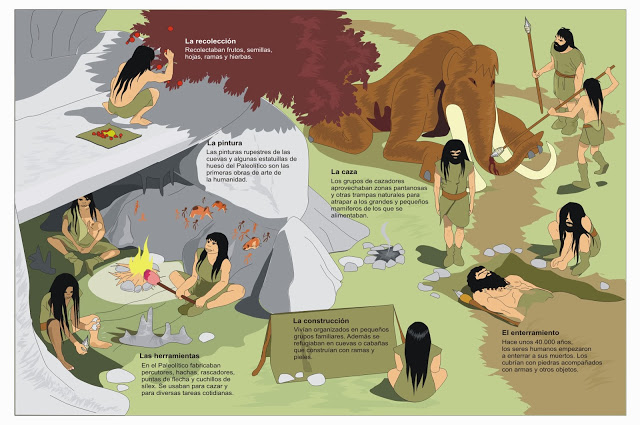
Actividades del Hombre Prehistórico
Escena de las actividades tipo del Hombre del Paleolítico
Escena de las actividades tipo del Hombre del Neolítico

Escena de las actividades tipo del Hombre de la Edad de los Metales

Evolución del Ser Humano

Periodización (división de la historia en distintos periodos)
Se conoce como periodización al campo de las ciencias sociales que trata de dividir la historia u otro campo del conocimiento (la ciencia, la literatura, el arte) en distintos períodos que posean unos rasgos comunes entre sí, lo suficientemente importantes como para hacerlos cualitativamente distintos a otros períodos.
- En historia, la periodización más amplia da períodos denominados edades, mientras que los denominados época designan divisiones más breves o locales. En el campo de lahistoria natural o geología se utiliza la expresión eras (eras geológicas), aunque también se habla de era como período histórico en el campo de la cronología. Cada una de ellas da origen a distintos calendarios; término que se aplica también a periodos dominados por un personaje histórico, un hecho o un proceso que se considera fundamental. Época geológica es una subdivisión de la era geológica. La escala del tiempo geológico se divide en orden descendente de jerarquía de la siguiente manera: Eón, era, período, época y edad.
La periodización en la Historia
No hay un acuerdo universal sobre la periodización en Historia, aunque sí un consenso académico sobre los periodos de la Historia de la Civilización Occidental, basado en los términos acuñados por Cristóbal Celarius (Edades Antigua, Media y Moderna), que pone al mundo clásico y su renacimiento como los hechos determinantes para la división.
En el siglo XVI los historiadores de la literatura y los filólogos, estudiando el latín señalaron tres fases en su gradual evolución: la "alta edad" o "superior" que llegaba hasta Constantino, etapa del latín clásico; la "edad media" de la lengua, que alcanzaba desde Constantino a Carlomagno (siglos IV al IX), y la "edad ínfima" iniciada en el 842 con el primer texto en romance, Los Juramentos de Estrasburgo, Por eso precisamente Ch. D. Du Cange tituló su famoso diccionario Glossarium ad scriptores mediae et infimae latinitatis (París, 1678). La primera ocasión en que se designa el término "Edad media" con sentido histórico parece haber sido en 1639, por el liejense Rasuin en su Laodium. La expresión pasaría desde ese mismo siglo XVII a designar el período de transición entre la antigüedad clásica y el renacer de su cultura experimentada en la Edad Nueva que habita tomado cuerpo a lo largo del siglo XV. Y, en consecuencia, su uso tendía a menospreciar los valores de dicha edad intermedia como un puente o una noche de “mil años”. Los pedagogos fueron los responsables de que este nuevo concepto de la Edad Media adquiriera carta de naturaleza en los manuales o síntesis de historia. Un profesor de fines del siglo XVII, Cristóbal Séller (1634-1707) o Celarius –como gustaba llamarse latinizando su nombre a la manera humanista- introdujo la modalidad en uno de los manuales escolares de Historia Antigua editado en 1685, y la claridad que implicaba para la explicación histórica le indujo a repetirla en otro, titulado Historia Medii Aevi a temporibus Constanini Magni ad Constaninopolim a Turcis captam deducta (Jena, 1688). Otro profesor, Loescher, la repitió en un manual alemán: Geschicchte der Mittleren Zeiten (1725), y no tardó en generalizarse el nuevo concepto, porque resultaba cómoda esa división de la Historia.
Manuel Riu (1978)