
Once Upon a Time... LIFE - Digestion
KIBUBU
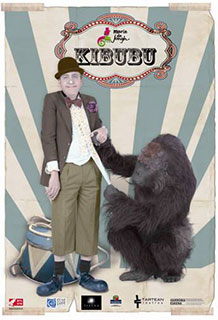
kibubu es un espectáculo gestual, clownesco, que se apoya en la música y el juego teatral.
Xebas y Cocó forman una pareja artística de payasos con más ilusión que éxito. Para el futuro espectáculo que preparan, Xebas decide introducir un elemento con el que pretende dar la campanada: un gorila de verdad, de carne y hueso. Está convencido de que si lo doma y le enseña los diferentes números, su suerte cambiará y ganarán el aplauso del público. Sin embargo, no es tanto el gorila quien va a aprender de esta experiencia; Xebas y Cocó van a aprender una lección que jamás olvidarán.
“Un espectáculo sobre el respeto y la libertad”.
Questions and Answers: DIGESTION and RESPIRATION
1. What is a cell? What are the main functions it performs?
The cell is the smallest unit of life (the smallest living unit of the human body).
Like all living things, it performs the basic life processes of nutrition, interaction and reproduction.
2. What do groups of cell form? Name and explain what the functions of the different tissues are.
Groups of similar cells that work together form tissues.
Different tissues perform specific functions in the body:
- Skin tissue covers the outside of the body.
- Fat, or adipose tissue, stores fats for energy.
- Bone tissue forms bones and supports the body.
- Muscle tissue moves the different body parts.
- Nervous tissue transmits information around the body and coordinates the body’s functions.
3. What do groups of tissues form? Name five of them.
Groups of tissues that work together to perform different functions form organs. For example: the brain, the stomach, the liver, the heart and the lungs.
4. What do groups of organs form? Name a few of them.
Groups of organs that work together to perform the same function form systems that perform the basic life processes of nutrition, interaction and reproduction. For example: the digestive system, the respiratory system, the nervous system and the male and female reproductive systems.
5. What are the basic life processes different organs perform? Classify the systems each basic life process belongs to.
The basic life processes different organs perform are nutrition, interaction and reproduction.
Nutrition process: digestive system, respiratory system, circulatory system and excretory system.
Interaction process: muscular system, skeletal system, nervous system and endocrine system.
Reproduction process: female and male reproductive systems.
6. Which are the parts of the digestive system? Name them in order.
The digestive system includes the alimentary canal and various glands that produce digestive juices. The parts of the digestive system are:
- Mouth
- Pharynx
- Salivary glands
- Esophagus
- Stomach
- Liver
- Pancreas
- Gall bladder
- Small intestine
- Large intestine
- Rectum
7. Where does digestion start? Explain it.
Digestion starts in the mouth, where our teeth cut and crush the food. Then the tongue mixes the food with saliva and forms a soft ball called bolus. The bolus goes to the pharynx and down the esophagus to the stomach.
8. How many parts has the small intestine got?
The small intestine has got three parts: the duodenum, the jejunum and the ileum.
9. Which part of the body produces saliva?
The salivary glands produce the liquid called saliva.
10. Where does the body store bile?
The bile is produced in the liver and stored in the gall bladder.
11. Define: bolus, chyme and chyle.
Bolus is the soft ball produced in our mouth when the food (which is cut and crushed by our teeth) is mixed with saliva.
When the stomach mixes the bolus with gastric juices it changes into a thick paste called chyme.
In our small intestine, the chyme mixes with intestinal juice, bile and pancreatic juice, producing a thin paste called chyle.
12. What are the five most important nutrients for our body. Explain why each one is important.
The five most important nutrients for our body are:
- Carbohydrates: our body breaks down carbohydrates into sugar for energy.
- Fats, which help our body to grown and stay warm. Our body stores fats for extra energy.
- Proteins: our body uses proteins to grow and repair tissues, like muscles and skin.
- Vitamins and minerals: our body needs vitamins and minerals to work properly and stay healthy.
- And water which is essential for our body.
13. Which food contains fat? How many portions should we eat a day?
We can get fats from oil, butter and cheese. We should eat 3 portions of fats a day.
14. What do pasta and bread contain? How many portions should we eat a day?
Pasta and bread contain carbohydrates. We should eat 6 portions of carbohydrates a day.
15. Which foods have got lots of proteins in? How many portions should we eat a day?
We get proteins form meat, fish, eggs, dairy products, beans and nuts. We should eat 2 portions a day.
16. Which foods have got lots of vitamins in? How many portions should we eat a day?
Fresh fruit and vegetables have got lots of vitamins (and minerals). We should eat 5 portions a day.
17. What does a healthy diet include?
A healthy diet should include all the nutrients that our body needs. This depends on your age, your sex and how much physical activity you do.
18. Which are the parts of the respiratory system? Name them in order.
The respiratory system has got various parts:
- Nasal passages
- Pharynx
- Larynx
- Trachea
- Bronchi
- Lungs
- Bronchioles
- Alveoli
19. Which are the two actions breathing includes? Name and explain them.
Breathing includes two different actions:
- Inhalation: when you breathe in. The diaphragm moves down and the rib cage expands. This pulls air into the lungs.
- Exhalation: when you breathe out. The diaphragm moves up and the rib cage contracts. This pushes air out of the lungs.
20. Name and explain the exchange of gases that occurs when breathing.
When you breathe in, the air goes to your alveoli. The oxygen in the air goes through the walls of your alveoli and into your capillaries. Then your blood carries the oxygen to all the cells in your body.
Your blood also takes carbon dioxide away from your cells. In your lungs, this carbon dioxide goes through the walls of your capillaries and into your alveoli. Then it leaves your body when you breathe out.
DIGESTION and RESPIRATION by Luis Merino Beltrán
KET and PET online practice
Do you want to do more online practice?
KET or PET for schools?
Click on the picture and choose the appropriate level to do lots of extra practice online.

FOOD PYRAMID
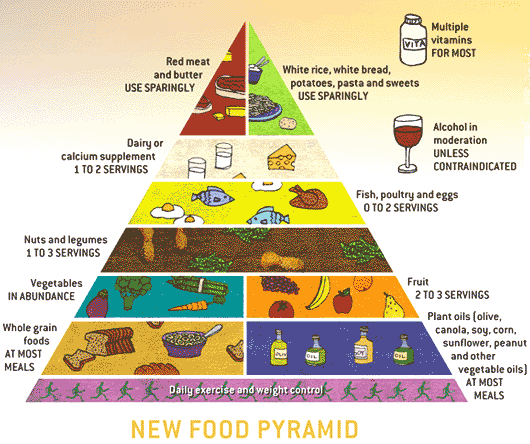
Nutrition consist of extracting nutrients and oxygen distributing them around the body and excreting the residues.
The different nutrients contained in food are:
- PROTEINS produce our body tissues and are essential for the functioning of our cells.
- CARBOHYDRATES are the most important source of energy; they include starches, which are found in cereals and potatoes, and sugars which are abundant in fruit.
- FATS give us energy. There are both animal and vegetable fats.
- MINERALS control growth and are important for the functioning of the nervous system, the contraction of muscles and the coagulation of blood.
- VITAMINS control the functioning of many of the organs in our body and help us to stay healthy.
We must follow a healthy and balanced diet!!!!
Nuestro Mercadillo de San Valentín
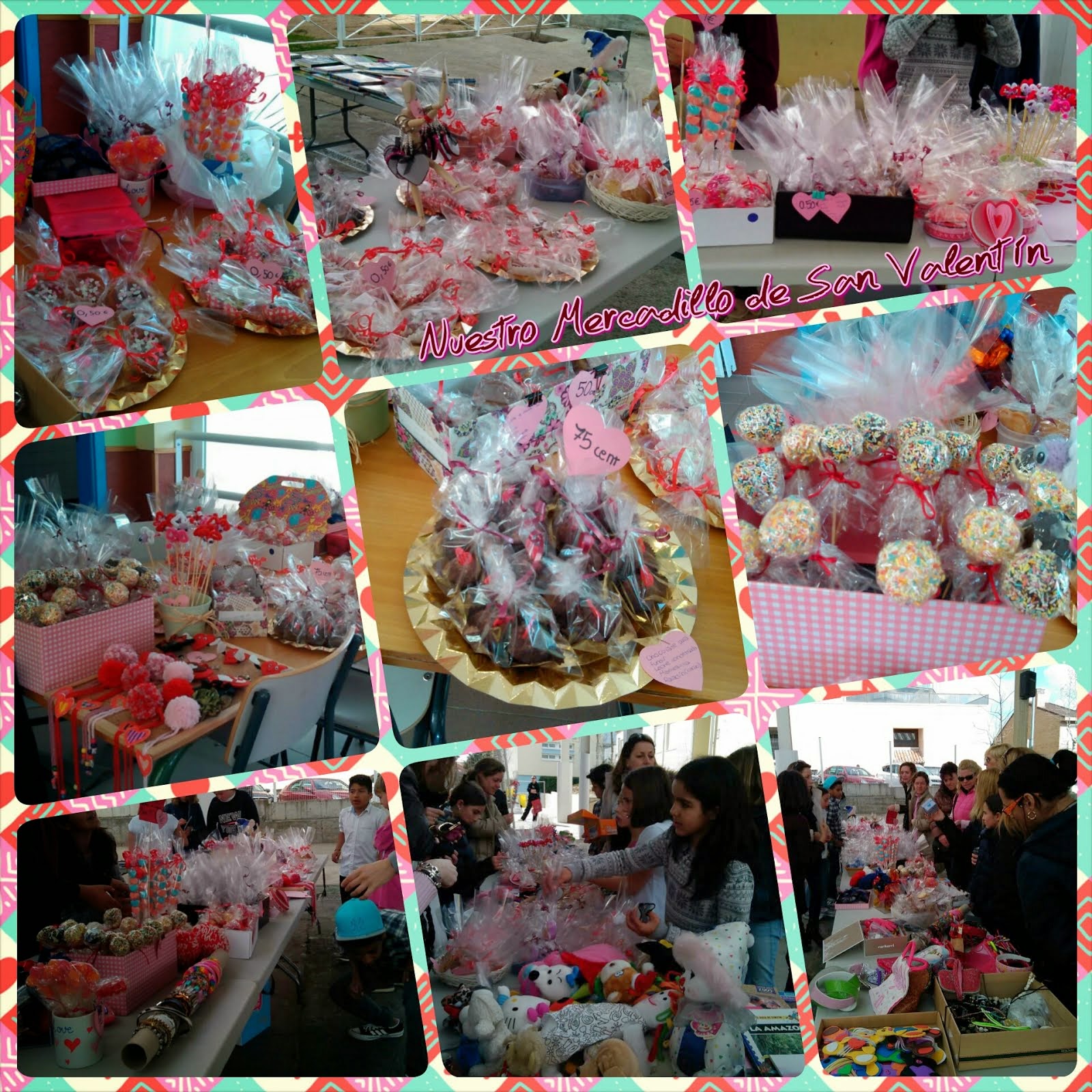
¡Qué bonito todo!!!
Pero además quedar todo tan bonito y del día tan estupendo que hizo, os tengo que contar que en el mercadillo especial de San Valentín recaudamos 305 eurazos!!!!!!!!
¡¡Yujuuuuu!!!!
¡¡Qué viva el amor!!!!!
How the Human Body Works: CIRCULATION AND DIGESTION
GRAFFITI

This site allows you to create custom graffiti images with multiple font and design options. This website is a jumping off point for our graffiti project.
Click on the "ART" picture above for a detailed view.
Click on the "ART" picture above for a detailed view.
HOW THE BODY WORKS
Click on the image to visit the KidsHealth website, with plenty of information, activities, quizzes, movies and lots of interesting facts about the human body.

30 de enero: DÍA ESCOLAR DE LA NO VIOLENCIA Y LA PAZ
Desde 1964, para conmemorar la muerte de Mahatma Gandhi líder nacional y espiritual de la India, asesinado a tiros en 1948 por un integrista hindú, se celebra el 30 de enero el Día Escolar de la No Violencia y la Paz, reconocido por la UNESCO en 1993.
En esta fecha se recuerda la necesidad de la educación para la tolerancia, la solidaridad, el respeto a los Derechos Humanos, la no violencia y la paz.
El lema de este día es:
’Amor universal, no-violencia y paz. El amor universal es mejor que el egoísmo, la no-violencia es mejor que la violencia y la paz es mejor que la guerra’.
What a Wonderful World - The Ramones
Es muy fácil...
Example of PET for Schools SPEAKING TEST
Example of KET for Schools SPEAKING TEST
Información sobre fechas de exámenes PET y KET
Con respecto a los exámenes externos de inglés que los alumnos de 6º tienen que realizar al finalizar su etapa de primaria, queremos comunicaros que las pruebas escritas tendrán lugar el próximo 21 de abril y las pruebas orales del 16 de marzo al 21 de abril de 2015. Dada la importancia de estos exámenes, os rogamos organicéis vuestros calendarios para aseguraros de que acudir al colegio esos días.
Queremos recordaros también que todos los alumnos de 6º que van a realizar dichas pruebas tienen que tener su DNI en vigor para poder identificarse en las mismas.
Desde casa podéis hacer prácticas online si visitáis la siguiente página web que ofrece la posibilidad de practicar Reading, Writing, and Listening. Hay que elegir nivel, PET o KET, y así practicar las distintas partes del examen.


PASSIVE VOICE
Use of Passive
Passive voice is used when the focus is on the action. It is not important or not known, however, who or what is performing the action.
Example: My bike was stolen.
In the example above, the focus is on the fact that my bike was stolen. I do not know, however, who did it.
Sometimes a statement in passive is more polite than active voice, as the following example shows:
Example: A mistake was made.
In this case, I focus on the fact that a mistake was made, but I do not blame anyone (e.g. You have made a mistake.).
Form of Passive
Subject + finite form of to be + Past Participle (3rd column of irregular verbs)
Example: A letter was written.
When rewriting active sentences in passive voice, note the following:
- the object of the active sentence becomes the subject of the passive sentence
- the finite form of the verb is changed (to be + past participle)
- the subject of the active sentence becomes the object of the passive sentence (or is dropped)
Examples of Passive 
| Tense | Subject | Verb | Object | |
|---|---|---|---|---|
| Simple Present | Active: | Rita | writes | a letter. |
| Passive: | A letter | is written | by Rita. | |
| Simple Past | Active: | Rita | wrote | a letter. |
| Passive: | A letter | was written | by Rita. | |
| Present Perfect | Active: | Rita | has written | a letter. |
| Passive: | A letter | has been written | by Rita. | |
| Future I | Active: | Rita | will write | a letter. |
| Passive: | A letter | will be written | by Rita. | |
| Hilfsverben | Active: | Rita | can write | a letter. |
| Passive: | A letter | can be written | by Rita. | |
Examples of Passive 
| Tense | Subject | Verb | Object | |
|---|---|---|---|---|
| Present Progressive | Active: | Rita | is writing | a letter. |
| Passive: | A letter | is being written | by Rita. | |
| Past Progressive | Active: | Rita | was writing | a letter. |
| Passive: | A letter | was being written | by Rita. | |
| Past Perfect | Active: | Rita | had written | a letter. |
| Passive: | A letter | had been written | by Rita. | |
| Future II | Active: | Rita | will have written | a letter. |
| Passive: | A letter | will have been written | by Rita. | |
| Conditional I | Active: | Rita | would write | a letter. |
| Passive: | A letter | would be written | by Rita. | |
| Conditional II | Active: | Rita | would have written | a letter. |
| Passive: | A letter | would have been written | by Rita. | |
Passive Sentences with Two Objects 
Rewriting an active sentence with two objects in passive voice means that one of the two objects becomes the subject, the other one remains an object. Which object to transform into a subject depends on what you want to put the focus on.
| Subject | Verb | Object 1 | Object 2 | |
|---|---|---|---|---|
| Active: | Rita | wrote | a letter | to me. |
| Passive: | A letter | was written | to me | by Rita. |
| Passive: | I | was written | a letter | by Rita. |
As you can see in the examples, adding by Rita does not sound very elegant. That’s why it is usually dropped.
Personal and Impersonal Passive
Personal Passive simply means that the object of the active sentence becomes the subject of the passive sentence. So every verb that needs an object (transitive verb) can form a personal passive.
Example: They build houses. – Houses are built.
Verbs without an object (intransitive verb) normally cannot form a personal passive sentence (as there is no object that can become the subject of the passive sentence). If you want to use an intransitive verb in passive voice, you need an impersonal construction – therefore this passive is called Impersonal Passive.
Example: he says – it is said
Impersonal Passive is not as common in English as in some other languages (e.g. German, Latin). In English, Impersonal Passive is only possible with verbs of perception (e. g. say, think, know).
Example: They say that women live longer than men. – It is said that women live longer than men.
Although Impersonal Passive is possible here, Personal Passive is more common.
Example: They say that women live longer than men. – Women are said to live longer than men.
The subject of the subordinate clause (women) goes to the beginning of the sentence; the verb of perception is put into passive voice. The rest of the sentence is added using an infinitive construction with ’to’ (certain auxiliary verbs and that are dropped).
Sometimes the term Personal Passive is used in English lessons if the indirect object of an active sentence is to become the subject of the passive sentence.
Exercises
Exercises on Passive (Form)
Exercises on Passive (Active → Passive)
- Exercise on Passive with Simple Present
- Exercise on Passive with Simple Past
- Exercise on Passive with Present Progressive
- Exercise on Passive with Past Progressive
Exercises on Passive (Active or Passive)
Tests on Passive
HAPPY NEW YEAR!!!!

Proyecto: LA UNIÓN EUROPEA

Prepara una presentación en el formato que tú quieras (sé creativo; utiliza tu imaginación), sobre el país de la Unión Europea que te haya correspondido e incluye los siguientes puntos:
- Nombre del país y su capital.
- Año de anexión a la Unión Europea.
- Bandera.
- Ciudades importantes.
- Población y superficie.
- Países fronterizos.
- Lengua/s oficial/es.
- Moneda.
- Religión.
- Sistema político. Líder político/monarca.
- Ríos y montañas importantes.
- Gastronomía, monumentos, personajes famosos, éxitos deportivos, arte, música,…
- Un poco de historia.
Visita las siguientes páginas web para obtener más información: