Blogia

Our 6th grade Blog

ENERGY - Questions

  1. What is energy?
  2. Which are the most common forms of energy? Give an example of each one.
  3. What type of energy depends on an object’s mass and velocity?
  4. What type of energy is there in carbohydrates?
  5. What happens when an object releases thermal energy?
  6. When does an object’s potential energy decrease?
  7. What are non-renewable sources of energy?
  8. What type of energy sources are replaced naturally?
  9. What is natural gas?
  10. What is coal?
  11. What is petroleum?
  12. What is uranium? What happens when we release the energy in uranium?
  13. Why are non-renewable sources of energy limited?
  14. What are the main alternative sources of energy?
  15. What keeps the water in a reservoir?
  16. What type of energy has the water got when it’s in the reservoir?
  17. What type of energy has the turbine of a reservoir got when it’s moving?
  18. What moves the blades of a wind turbine?
  19. Where do we get biofuels from?
  20. What is the rule of the three R’s?

Jornada de Puertas Abiertas en el Instituto

La directora del Instituto de San Agustín me comunica que os informe que el jueves 18 de abril, a las 16 h, tendrá lugar la Jornada de puertas abiertas, para que los padres y alumnos que lo deseen puedan conocer nuestras instalaciones y la oferta educativa del centro. 

La Jornada comenzará con una charla informativa, a cargo del Equipo Directivo y continuará con una visita guiada por las instalaciones. 
Visita la web  http://ies.sanagustin.sanagustin.educa.madrid.org/index.php

Esperamos que os resulte de interés.

THE ZARZA GLOBE Programme

The ZARZA GLOBE Company is very proud to invite you all to their first play ever.

It will be tomorrow (Wednesday 17th April) at 14pm in the "Casa de  Cultura - San Agustín de Tagaste."

We hope to see you there!!


3rd CONDITIONAL: NO POSSIBILITY

IF + SUBJECT + PAST PERFECT, SUBJECT + WOULD + HAVE + PAST PARTICIPLE

SUBJECT + WOULD + HAVE + PAST PARTICIPLE + IF + SUBJECT + PAST PERFECT

The third conditional (also called conditional type 3) is a structure used for talking about unreal situations in the past.

The first conditional and second conditionals talk about the future. With the third conditional we talk about the past. We talk about a condition in the past that did not happen. That is why there is no possibility for this condition.The third conditional is also like a dream, but with no possibility of the dream coming true.

Last week you bought a lottery ticket. But you did not win. :-(


conditionresult
 Past PerfectWOULD HAVE + Past Participle
IfI had won the lotteryI would have bought a car.


Notice that we are thinking about an impossible past condition. You did not win the lottery. So the condition was not true, and that particular condition can never be true because it is finished.

We use the past perfect tense to talk about the impossible past condition. We use WOULD HAVE + past participle to talk about the impossible past result.

The important thing about the third conditional is that both the condition and result are impossible now.

Look at some more examples in the tables below:

IFconditionresult
 past perfectWOULD HAVE + past participle
IfI had seen MaryI would have told her.
IfTara had been free yesterdayI would have invited her.
Ifthey had not passed their examtheir teacher would have been sad.
Ifit had rained yesterdaywould you have stayed at home?
Ifit had rained yesterdaywhat would you have done?
 
resultIFcondition
WOULD HAVE + past participle past perfect
I would have told MaryifI had seen her.
I would have invited Taraifshe had been free yesterday.
Their teacher would have been sadifthey had not passed their exam.
Would you have stayed at homeifit had rained yesterday?
What would you have doneifit had rained yesterday?


Now check your knowledge with this activity:

Third Conditional Exercise

TARGET KET and PET for Schools


Here is some information, advice and extra practise to help you pass your exam.

  • Find out about the exam: How many papers are there? What do you have to do?
  • Try an online practice test in the style of the computer-based test.
  • Read advice on how to prepare for the exam.
  • Read tips for exam day to make sure you are ready.
  • Watch a video of a speaking test so you can see what you need to do.
  • Look at links for students and find out more about the exam and practise grammar and vocabulary.

TARGET KET for Schools Student’s Area

TARGET PET for Schools Student’s Area

ENERGY SOURCES WEBQUEST

                  20110126232359-webquest.png

This term project is to solve the Energy Sources Webquest we have created for you.

Work hard, make your best, have fun and enjoy learning about Energy Sources.

Now click and start living a WEBQUEST experience!!!

POTENCIAL and KINETIC ENERGY SONG

PITCH DROP EXPERIMENT


The pitch drop experiment is a long-term experiment which measures the flow of a piece of pitch over many years. Pitch is the name for any of a number of highly viscous liquids which appear solid, most commonly bitumen. At room temperature, tar pitch flows at a very slow rate, taking several years to form a single drop.

The most famous version of the experiment was started in 1927 by Professor Thomas Parnell of the University of Queensland in Brisbane, Australia, to demonstrate to students that some substances that appear to be solid are in fact very-high-viscosity fluids. Parnell poured a heated sample of pitch into a sealed funnel and allowed it to settle for three years. In 1930, the seal at the neck of the funnel was cut, allowing the pitch to start flowing. Large droplets form and fall over the period of about a decade.

The eighth drop fell on 28 November 2000, allowing experimenters to calculate that the pitch has a viscosity approximately 230 billion (2.3×10¹¹) times that of water. 

The ninth drop is expected to fall in 2013!!

Timeline

DateEventDuration

(months)

Duration

(years)

1927     Experiment set up  
1930     The stem was cut  
December 1938     1st drop fell96–1078.0–8.9
February 1947     2nd drop fell998.3
April 1954     3rd drop fell867.2
May 1962     4th drop fell978.1
August 1970     5th drop fell998.3
April 1979     6th drop fell1048.7
July 1988     7th drop fell1119.3
28 November 2000     8th drop fell14812.3

KINETIC AND POTENCIAL ENERGY

ENERGY

KET for Schools Real Test

Isn’t it interesting to have the opportunity of watching a real oral test?

I’m sure you can do it better, can’t you?  Guiño

Writing Task16

Friday, 5th April 2013


Write an answer to one of the questions (1 or 2).

Write your answer in about 100 words.


Question 1

• This is part of a letter you receive from your English friend Pat.

My family and I are coming to visit your area soon. Can you tell me some good places for us to go? And what will the weather be like while we are there?

• Now write a letter, answering Pat’s questions.


Question 2

• Your English teacher asks you to write a story.

• This is the title for your story:

‘The day we went to the zoo!’


HUMAN REPRODUCTION - Questions


  1. What are the primary sex characteristics?
  2. What are the secondary sex characteristics?
  3. When do secondary sex characteristics start appearing?
  4. When do boys usually go through puberty?
  5. What happens to a girl’s hips during puberty?
  6. What parts of a woman’s body produce egg cells?
  7. What is the menstrual cycle? Explain it.
  8. How long is a woman’s menstrual cycle?
  9. What are the external sex organs of the female reproductive system?
  10. What are the internal organs of the female reproductive system? Where are they located?
  11. What are the female gametes called?
  12. What is the muscular canal between the vulva and the uterus called?
  13. What parts of the male reproductive system are external?
  14. Which parts of the man’s body produce sperm cells?
  15. What is the bag of skin around the testicles called?
  16. What do the seminal vesicles produce?
  17. What protects the glans at the end of the penis?
  18. How does fertilisation occur?
  19. When does the embryo join itself to the wall of the uterus?
  20. What does the afterbirth include?

PET for Schools on-line practice

An intermediate level exam, testing your ability to deal with written and spoken communications.

Pet English Test for Schools (PETS)


Conception to Birth - Development of Fetus

Play and check your knowledge about the HUMAN BODY

Cambridge English: Preliminary (PET) for Schools

Cambridge English: Preliminary for Schools banner

Practical English for everyday use

Cambridge English: Preliminary for Schools, also known as Preliminary English Test (PET) for Schools, shows that a student can understand and communicate using everyday written and spoken English.

Cambridge English: Preliminary for Schools is an intermediate level qualification.

Why take the exam?

Every year, thousands of students take Cambridge English: Preliminary for Schools to show they can use English to communicate for everyday purposes.

Cambridge English: Key (KET) for Schools

Cambridge English: Key for Schools banner

A great first step in learning English 

Cambridge English: Key for Schools, also known as Key English Test (KET) for Schools, shows that a student can use simple, everyday written and spoken English. 

Cambridge English: Key for Schools is a basic level qualification.

Why take the exam?

Every year, thousands of students take Cambridge English: Key for Schools to show they can use everyday written and spoken English.

ABRAZOS...

and HAVE A GREAT EASTER TIME!!!


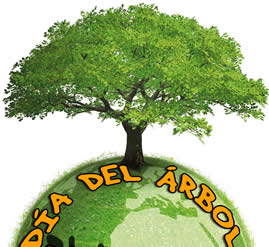
21 de marzo: DÍA DEL ÁRBOL

21 de marzo: DÍA DEL ÁRBOL

El Día del Árbol es un recordatorio de la importancia de proteger las superficies arboladas.

Se celebra el 21 de marzo, esto es, el primer día de primavera en el hemisferio norte y el primer día de otoño en el hemisferio sur.

Como en muchos países el Día del Árbol se utiliza para plantar árboles y dado que esta fecha no es siempre propicia para que los árboles arraiguen, en ocasiones se eligen otras fechas más cercanas al invierno.

El Día Mundial del Árbol, también llamado Día Forestal Mundial, fue inicialmente una recomendación del Congreso Forestal Mundial que se celebró en Roma en 1969. Esta recomendación fue aceptada por la Organización de Naciones Unidas para la Agricultura y la Alimentación (FAO) en 1971.

¿Cuándo se celebró por primera vez el Día del Árbol?

Esta es una pregunta interesante. Como relata Miguel Herrero Uceda en su libro "Extremadura en el Corazón", hubo disputas sobre dónde se celebró por primera vez. 

En Estados Unidos se decía que la de Nebraska es la más antigua, de 1872. Desde Suecia se asegura que ya se instituyó en 1840. Así estaban las cosas cuando Villanueva de la Sierra, un pequeño pueblo cacereño, demostró que allí se había celebrado la Fiesta del Árbol en 1805, la más antigua de las que se tenían noticia.

Mientras Napoleón asolaba toda Europa, en esta población existía un párroco, Ramón Vacas, que, como dicen en las crónicas, persuadido de la importancia del arbolado por la salubridad, higiene, ornato, carácter, ambiente y costumbres, decide plantar árboles y darle un aire festivo. Comenzó el martes de carnaval. La fiesta y las plantaciones se prolongaron durante tres días, hubo banquetes y bailes. Se redactó un manifiesto de defensa de los árboles que fue enviado a otros pueblos para difundir el amor y el respeto a la naturaleza y en la que se pedía que ellos también celebraran plantaciones.

Ya han pasado más de 200 años de aquella singular iniciativa...