Blogia

Our 6th grade Blog

25 de noviembre: DÍA INTERNACIONAL DE LA ELIMINACIÓN DE LA VIOLENCIA CONTRA LA MUJER

«Millones de mujeres y niñas de todo el mundo son agredidas, golpeadas, violadas, mutiladas o incluso asesinadas en lo que constituyen atroces violaciones de sus derechos humanos.»

Ban Ki-moon, Secretario General de la Naciones Unidas


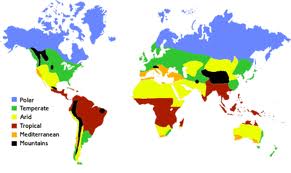
THE EARTH'S CLIMATE ZONES

THE EARTH'S CLIMATE ZONES

Didn’t you have time to copy the Earth’s Climate Zones Chart?

Do you need to check it?

Click on this link then.

CLIMATE ZONES

MAKE YOUR OWN WEATHER STATION

MAKE YOUR OWN WEATHER STATION

Meteorologists study the weather by recording and analyzing data. You can become an amateur meteorologist by building your own weather station and keeping a record of your measurements.


WEATHER and CLIMATE

PRESENT PERFECT with FOR, SINCE, JUST, BEFORE, ALREADY, YET

Present Perfect + for and since

Using the present perfect, we can define a period of time before now by considering its duration, with for + a period of time, or by considering its starting point, with since + a point in time.

For + a period of time

  • for six years, for a week, for a month, for hours, for two hours.
  • I have worked here for five years.

Since + a point in time

  • since this morning, since last week, since yesterday,
  • since I was a child, since Wednesday, since 2 o’clock.
  • I have worked here since 1990.

present perfect with for

  • She has lived here for twenty years.
  • We have taught at this school for a long time.
  • Alice has been married for three months.
  • They have been at the hotel for a week.

present perfect with since

  • She has lived here since 1980.
  • We have taught at this school since 1965
  • Alice has been married since March 2nd.
  • They have been at the hotel since last Tuesday.


Present perfect + just, before, already and yet

PRESENT PERFECT + just and before

Just

indicates that the action has happened in the very recent past and it is completed, e.g.
a. I’ve just lost my car keys and can’t leave for work.
b. Don’t call John, I’ve just done it.

Position

Just can be placed before the main verb (past participle).

Before

indicates the existence of past events, and emphasizing the pastness of the event with a redundant before e.g.
a. She has seen the movie before.
b. I have met her before the summer.

Position

Before is usually placed at the end of the sentence.

PRESENT PERFECT + already and yet

refers to an action that has happened at an unspecified time before now. It suggests that there is no need for repetition, e.g.
a. I’ve already drunk three coffees this morning. (and you’re offering me another one!)
b. Don’t write to John, I’ve already done it.

It is also used in questions:

  • Have you already written to John?
  • Has she finished her homework already?

Position

already can be placed before the main verb (past participle) or at the end of the sentence:

  • I have already been to Tokyo.
  • I have been to Tokyo already.

Yet

is used in negative statements and questions, to mean (not) in the period of time between before now and now, (not) up to and including the present. e.g.

  • Have you met Judy yet?
  • I haven’t visited the Tate Gallery yet.
  • Has he arrived yet?
  • They haven’t eaten yet.

Position

Yet is usually placed at the end of the sentence.

SIMPLE PAST vs PRESENT PERFECT

                    20111122225946-pperfect-past.jpg

Simple Past

Present Perfect Simple

Irregular verbs: see 2nd column of irregular verbs

Example: I spoke

Irregular verbs: have/has + 3rd column of irregular verbs

Example:

I / you / we / they have spoken.
he / she / it has spoken
 

Regular verbs: have/has + infinitive + ed

Example: I / you / we / they have worked
he / she / it has worked


Exceptions when adding ’ed’:

  • when the final letter is e, only add d. Example: love - loved
  • after a short, stressed vowel, the final consonant is doubled. Example: admit - admitted
  • final l is always doubled in British English (not in American English). Example: travel - travelled
  • after a consonant, final y becomes i (but: not after a vowel). Example: worry - worried, but: play - played

Use

In British English, the use of Simple Past and Present Perfect is quite strict. As soon as a time expression in the past is given, you have to use Simple Past. If there are no signal words, you must decide if we just talk about an action in the past or if its consequence in the present is important.

Certain time in the past or just / already /yet?

Do you want to express that an action happened at a certain time in the past (even if it was just a few seconds ago) or that an action has just /already / not yet happened?

Simple PastPresent Perfect Simple

certain time in the past

Example: I phoned Mary 2 minutes ago.

just / already / not yet

Example: I have just phoned Mary.

Certain event in the past or how often so far?

Do you want to express when a certain action took place or whether / how often an action has happened till now?

Simple PastPresent Perfect Simple

certain event in the past

Example: He went to Canada last summer.

whether / how often till now

Example: Have you ever been to Canada? I have been to Canada twice.

Emphasis on action or result?

Do you just want to express what happened in the past? Or do you want to emphasise the result (a past action’s consequence in the present)?

Simple PastPresent Perfect Simple

Emphasis on action

Example:  I bought a new bike. (just telling what I did in the past.)

Emphasis on result

Example: I have bought a new bike. (with this sentence I actually want to express that I have a new bike now.)

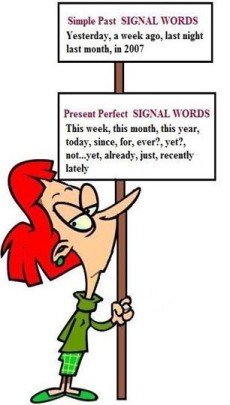
Signal Words

Simple Past   
   Present Perfect Simple
  • yesterday
  • ... ago
  • in 1990
  • the other day
  • last ...
  • just
  • already
  • up to now
  • until now / till now
  • ever
  • (not) yet
  • so far
  • lately / recently

Exercises:

Test


PRESENT PERFECT

Present Perfect Verb Tense

1. Present Perfect - Form

 The present perfect of any verb is composed of two elements : the appropriate form of the auxiliary verb to have (present tense), plus the past participle of the main verb. The past participle of a regular verb is base+ed, e.g. played, arrived, looked

Affirmative

Subject

to have

past participle

She

has

visited

Negative

Subject

to have + not

past participle

She

hasn’t

visited

Interrogative

to have

subject

past participle

Has

she

visited..?

Interrogative negative
to have + notsubjectpast participle
Hasn’tshevisited...?

Example: to walk, present perfect

AffirmativeNegativeInterrogative

I have walked

I haven’t walked

Have I walked?

You have walked

You haven’t walked

Have you walked?

He, she, it has walked

He, she, it hasn’t walked

Has he,she,it walked

We have walked

We haven’t walked

Have we walked?

You have walked

You haven’t walked

Have you walked?

They have walked

They haven’t walked

Have they walked?

2. Present perfect, function

 The Present Perfect is used to indicate a link between the present and the past. The time of the action is before now but not specified, and we are often more interested in the resultthan in the action itself.

BE CAREFUL! There may be a verb tense in your language with a similar form, but the meaning is probably NOT the same.

The Present Perfect is used to describe:

  1. An action or situation that started in the past and continues in the present. Example: I have lived in Bristol since 1984 (= and I still do.)
  2. An action performed during a period that has not yet finished. Example: She has been to the cinema twice this week (= and the week isn’t over yet.)
  3. A repeated action in an unspecified period between the past and now. Example: We have visited Portugal several times.
  4. An action that was completed in the very recent past, (expressed by ’just’). Example: I have just finished my work.
  5. An action when the time is not important. Example: He has read ’War and Peace’(the result of his reading is important)

Note: When we want to give or ask details about when, where, who, we use the simple pastExample: He read ’War and Peace’ last week.

Examples:

1. Actions started in the past and continuing in the present.

  • They haven’t lived here for years.
  • She has worked in the bank for five years.
  • We have had the same car for ten years.
  • Have you played the piano since you were a child?

2. When the time period referred to has not finished.

  • I have worked hard this week.
  • It has rained a lot this year.
  • We haven’t seen her today.

3. Actions repeated in an unspecified period between the past and now.

  • They have seen that film six times.
  • It has happened several times already.
  • She has visited them frequently.
  • We have eaten at that restaurant many times.

4. Actions completed in the very recent past (+just).

  • Have you just finished work?
  • have just eaten.
  • We have just seen her.
  • Has he just left?

5. When the precise time of the action is not important or not known.

  • Someone has eaten my soup!
  • Have you seen ’Gone with the Wind’?
  • She’s studied Japanese, Russian and English.

HALLOWEEN CARTOON

HALLOWEEN WEBQUEST

HALLOWEEN WEBQUEST


How much do you know about Halloween already?

Learn more and test your knowledge by doing the task proposed in this HALLOWEEN WEBQUEST created just for you.


HALLOWEEN!!!!

HALLOWEEN!!!!

I have selected a few websites for you to get plenty of ideas and information about Halloween!!!

Scary surfing!!!

Halloween 2013

Activities for kids

British Council

LATITUDE AND LONGITUDE

Planet Earth - QUESTIONS

                
  1. Name and define the three parts of the Earth.
  2. What do we call the gaseous layer that surrounds the Earth? Name its layers.
  3. Which layer of the atmosphere reflects radio waves?
  4. What is the ozone layer?
  5. Which are the layers of the geosphere? Which one is mostly made of iron?
  6. Where can we find water in a liquid state on the Earth
  7. What are the properties of minerals?
  8. How are metamorphic rocks formed?
  9. What does the process of erosion do to rocks?
  10. How do sedimentary rocks become metamorphic rocks?
  11. Classify the following rocks by their origin: conglomerate, basalt, slate, granite, carbon, sandstone.
  12. What do we call magma when it flows out of a volcano?
  13. What are the parts of a volcano?
  14. Why are areas and distances distorted on maps?
  15. What is another name for the Prime Meridian?
  16. Define latitude and longitude.
  17. What is the latitude of the equator?
  18. What are meridians? And parallels?
  19. Are meridians circular or semicircular?

THE ROCK CYCLE

The Rock Cycle is a group of changes. Igneous rock can change into sedimentary rock or into metamorphic rock. Sedimentary rock can change into metamorphic rock or into igneous rock. Metamorphic rock can change into igneous or sedimentary rock. 

Igneous rock forms when magma cools and makes crystals. Magma is a hot liquid made of melted minerals. The minerals can form crystals when they cool. Igneous rock can form underground, where the magma cools slowly. Or, igneous rock can form above ground, where the magma cools quickly.
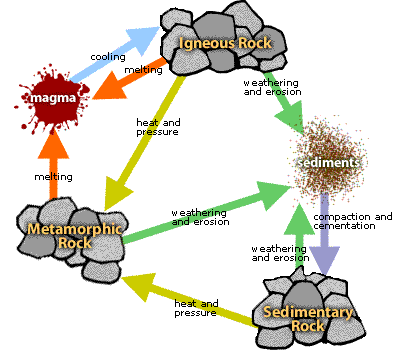
Image displaying the Rock Cycle.  Please have someone assist you with this.

When it pours out on Earth’s surface, magma is called lava. Yes, the same liquid rock matter that you see coming out of volcanoes.

On Earth’s surface, wind and water can break rock into pieces. They can also carry rock pieces to another place. Usually, the rock pieces, called sediments, drop from the wind or water to make a layer. The layer can be buried under other layers of sediments. After a long time the sediments can be cemented together to make sedimentary rock. In this way, igneous rock can become sedimentary rock.

All rock can be heated. But where does the heat come from? Inside Earth there is heat from pressure (push your hands together very hard and feel the heat). There is heat from friction (rub your hands together and feel the heat). There is also heat from radioactive decay (the process that gives us nuclear power plants that make electricity).

So, what does the heat do to the rock? It bakes the rock.

Baked rock does not melt, but it does change. It forms crystals. If it has crystals already, it forms larger crystals. Because this rock changes, it is called metamorphic. Remember that a caterpillar changes to become a butterfly. That change is called metamorphosis. Metamorphosis can occur in rock when they are heated to 300 to 700 degrees Celsius.

When Earth’s tectonic plates move around, they produce heat. When they collide, they build mountains and metamorphose (met-ah-MORE-foes) the rock.

The rock cycle continues. Mountains made of metamorphic rocks can be broken up and washed away by streams. New sediments from these mountains can make new sedimentary rock.

The rock cycle never stops.


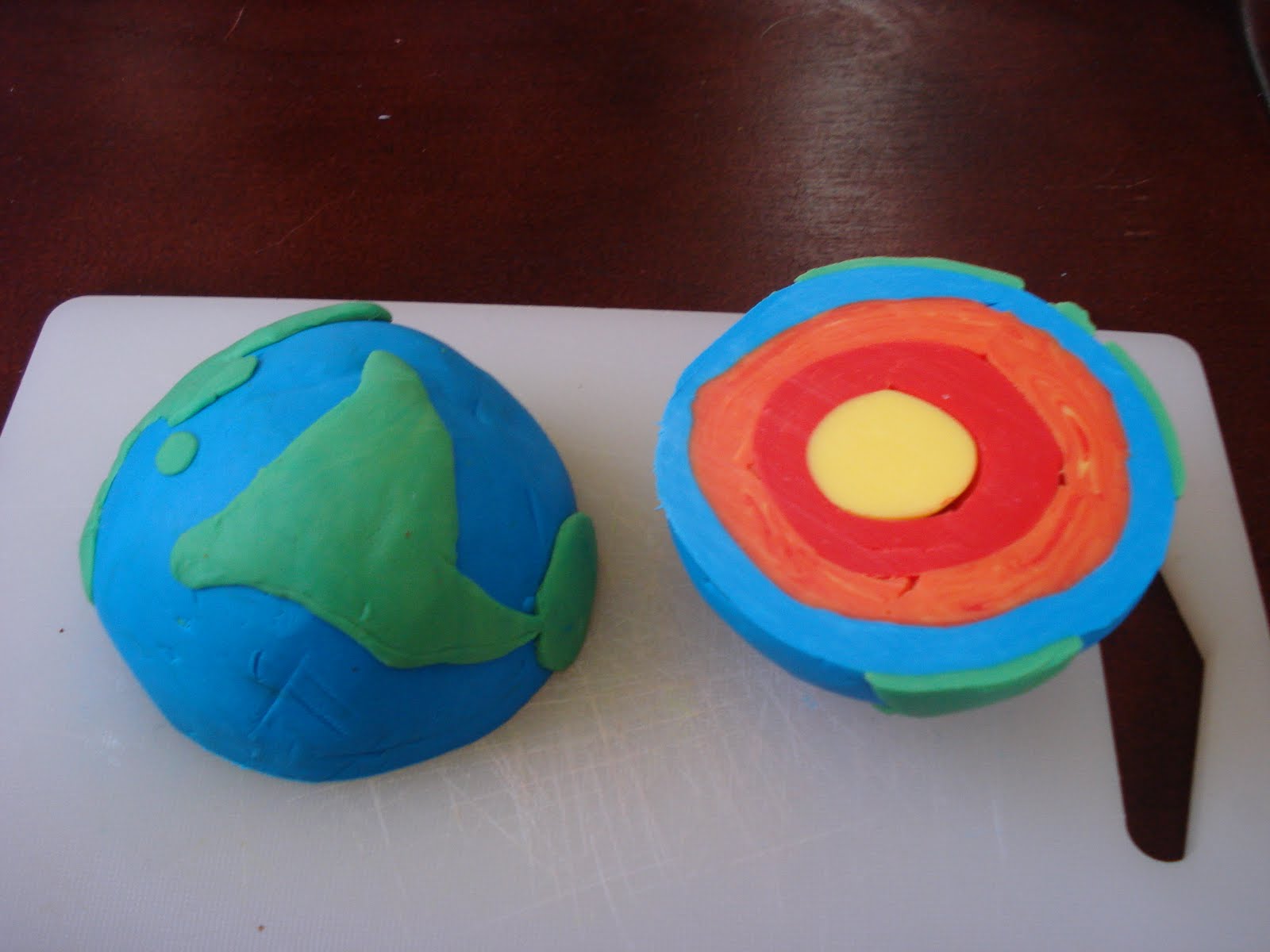
Layers of the Earth

Click on the image to follow the steps to make this model of the layers of the earth in plasticine.

WORLD RECORD: Felix Baumgartner


Published on Oct 15, 2012

After flying to an altitude of 39,045 meters (128,100 feet) in a helium-filled balloon, Felix Baumgartner completed a record breaking jump for the ages from the edge of space, exactly 65 years after Chuck Yeager first broke the sound barrier flying in an experimental rocket-powered airplane. Felix reached a maximum of speed of 1,342.8 km/h (833mph) through the near vacuum of the stratosphere before being slowed by the atmosphere later during his 4:20 minute long freefall. The 43-year-old Austrian skydiving expert also broke two other world records (highest freefall, highest manned balloon flight), leaving the one for the longest freefall to project mentor Col. Joe Kittinger.

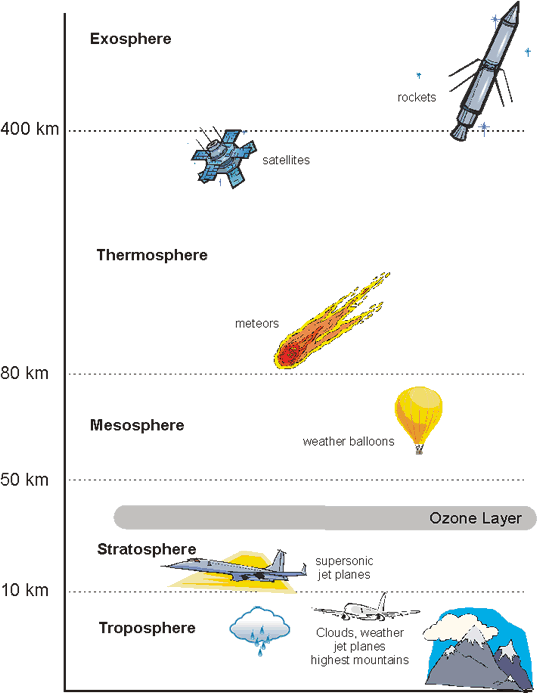
The layers of the ATMOSPHERE

Unit 2 - PLANET EARTH


 In this unit we are going to learn the following contents:

  • Value of water for life and knowledge of its adequate and inadequate uses.
  • Parts of the Earth: atmosphere, geosphere and hydrosphere. Definitions.
  • Components and layers of the atmosphere.
  • Materials and layers of the geosphere. Properties of minerals. Types of rocks according to their origin.
  • Phenomena produced by the energy inside the Earth.
  • Minerals and their basic characteristics.
  • Identification and representation of the layers of the atmosphere and their characteristics (troposphere, stratosphere, ionosphere).
  • Identification and representation of the layers of the geosphere (crust, mantle and core).
  • Classification of different kinds of rocks according to their origin (volcanic, sedimentary, metamorphic).
  • Recognition and representation of a volcano and its basic parts.
  • Representation of the Earth in different forms.
  • Recognition of the basic imaginary lines of the Earth (Equator, meridians and parallels).